Quietest whole house generators for HOA compliance
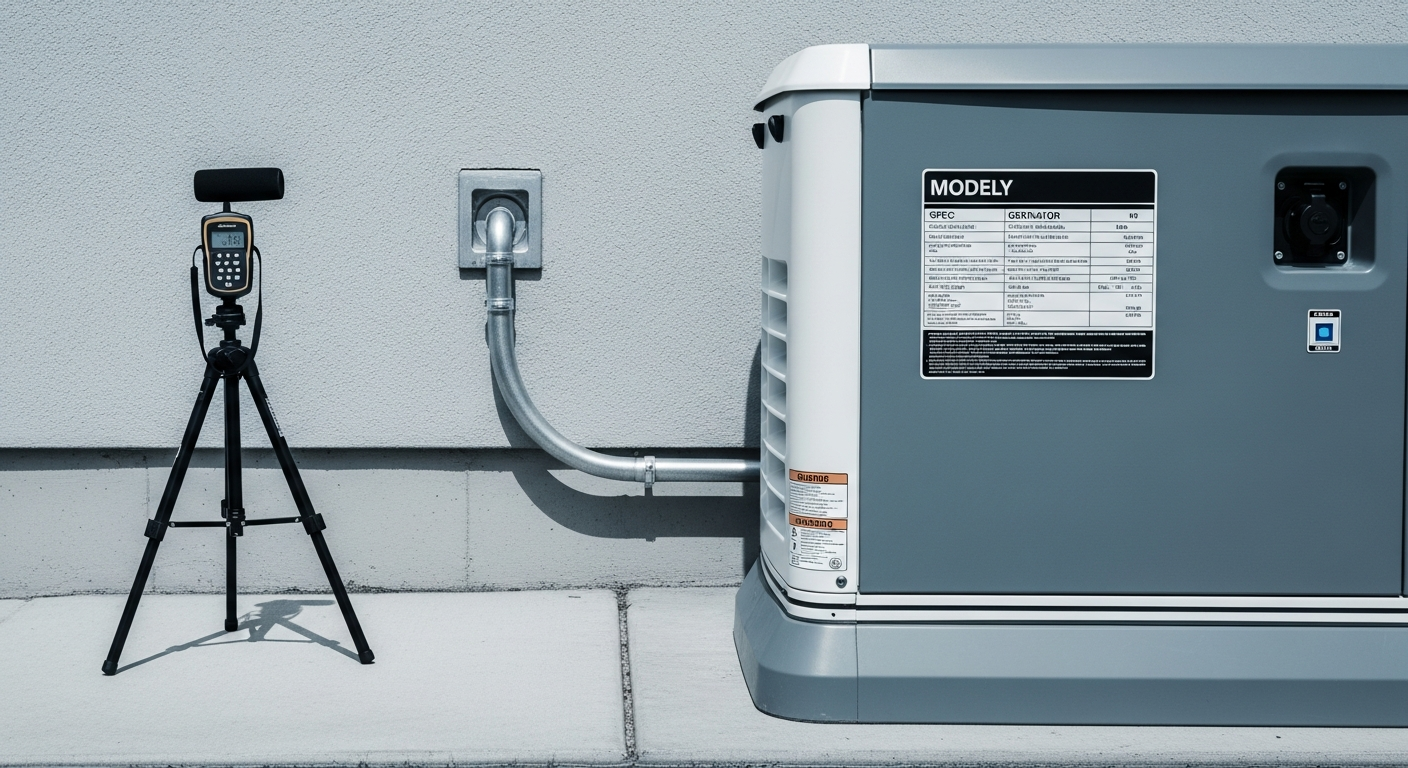
If HOA compliance is your priority, start here: the quietest published whole-house standby generator I found is the Champion 14 kW aXis at 62 dB(A) measured at 23 feet. If you need a true 20 kW class unit, the quiet end of the market is the Cummins QuietConnect RS20A/RS20AC at 65 dB(A). Most 20-26 kW air-cooled units from the big brands cluster around 67 to 68 dB(A).
That does not mean a 62 dB brochure number automatically gets you through the HOA. Generator fights usually happen at the property line, during the weekly exercise cycle, on lots that are too tight for the install to breathe. If you are still deciding whether a standby generator makes sense at all, read the standby generator buying guide first. Quiet is good. Quiet and undersized is useless.
The quietest standby generators I would actually shortlist
Here is the short list, sorted by the published normal-operation number that matters during a real outage:
| Generator | Published sound level at 23 ft | My read |
|---|---|---|
| Champion 14 kW aXis | 62 dB(A) | Quietest published number I found. The catch is capacity. A 14 kW unit can back up a house with load management, but not every house. |
| Cummins QuietConnect RS20A / RS20AC | 65 dB(A) | Best published number in the real 20 kW class. Strong choice if your load math lands around 20 kW and you want the quietest paper spec in that range. |
| Generac Guardian 14 kW | 65 dB(A) normal load, 55 dB(A) Quiet-Test exercise | Very good if your house can live on 14 kW. Exercise mode is especially neighbor-friendly. |
| Kohler 26RCA(L) | 67 dB(A) normal operation, 56 dB(A) exercise | A good compromise if you need big-unit capacity but still care about exercise-cycle noise. |
| Generac Guardian 20/22/24 kW | 67 dB(A) normal load, 55-57 dB(A) Quiet-Test exercise | The market baseline. Not the quietest in a blackout, but exercise mode is excellent and dealer coverage is hard to beat. |
| Briggs & Stratton PowerProtect 22 kW | 68 dB(A) normal operation, 64 dB(A) low idle | Respectable, but not a quiet leader on paper if HOA noise is your main filter. |
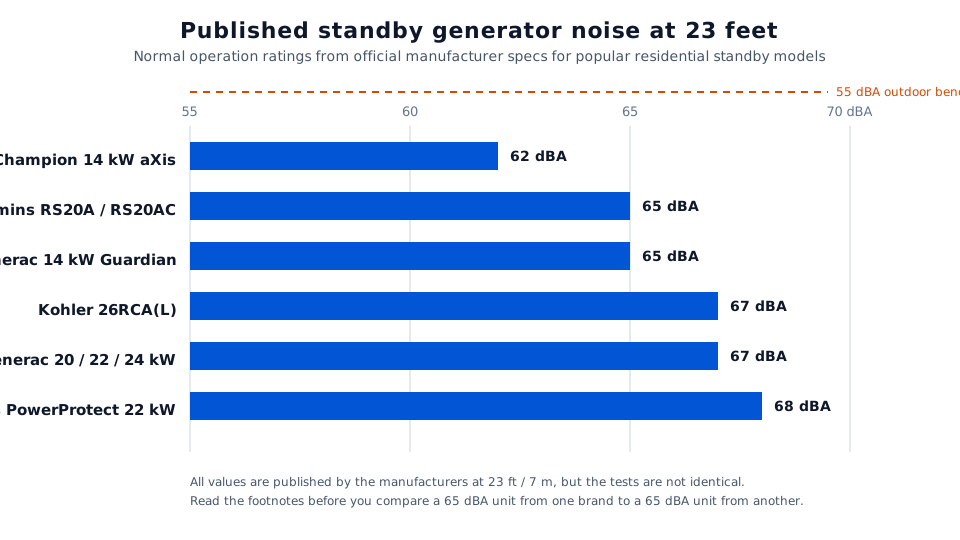
The part salespeople skip is the tradeoff. The quietest number on this list belongs to a 14 kW generator. That is not an accident. Smaller engines and smaller enclosures are usually easier to hush. If your house really needs 22 kW because you have central AC, a well pump, and an electric water heater, the practical quiet range is more like 65 to 68 dB(A), not 62.
The fine print manufacturers hope you skip
These numbers are useful, but they are not perfectly apples-to-apples.
Generac says its sound levels are taken from the front of the generator, and other sides may be higher. Kohler says its 26RCA number is the lowest of eight points measured around the enclosure. Cummins says its 65 dB(A) figure is the quietest point at a “normal load” of 3 kW. Briggs & Stratton says its sound figure is based on the lowest microphone at 7 meters and average household usage. Champion calls its 62 dB(A) figure approximate and says site conditions can change it.
That is why I would not overreact to a two-decibel gap in a brochure. A slightly louder generator placed behind landscaping, with the exhaust pointed away from the neighbor’s patio, can beat the “quieter” unit that gets jammed into a reflective corner of the house.
The exercise mode matters too. Kohler’s Eco Exercise is only 90 seconds unloaded. Briggs’ default Eco-Cise cycle is 16 seconds. Generac’s Quiet-Test runs five minutes. Cummins even offers a crank-only exercise mode that avoids a full engine run. In homeowner forums, that is the real complaint. Not outage noise. Weekly test noise.
What HOA compliance usually comes down to
The tricky part is that most boards and cities do not care what the generator does at 23 feet in a factory test. They care what your neighbor hears at the property line.
NIOSH summarizes older EPA environmental guidance at 55 dBA for outdoor activities. That helps explain why standby generators can be a problem on tight suburban lots. A 65 to 67 dB(A) machine sitting 23 feet away from the microphone is already above that outdoor annoyance benchmark before you factor in reflections, hard fencing, or the fact that your property line may be much closer than 23 feet.
Real ordinances show how fast this gets specific:
- Charlestown Township, Pennsylvania requires a HOA letter for properties in HOA developments and says generator noise must measure under 57 dB at the property line or residence, with a 21-foot setback.
- City of Beacon, New York exempts generators during a real outage, but regular testing has to be done on weekdays during daytime hours and is capped at 70 dBA at the affected property line.
- Morristown, New Jersey limits maintenance noise to 65 dB from 7:00 a.m. to 10:00 p.m., 50 dB overnight, and says maintenance runs can happen only once a week between 10:00 a.m. and 5:00 p.m. for no more than 30 minutes.
That is the pattern I see over and over. The board cares about three things: where the box sits, how visible it is, and how often it announces itself.
How to give yourself the best shot at approval
Do these five things and your odds go up immediately:
- Buy the smallest generator that honestly covers your outage plan. If your essentials fit on 14 kW with load shedding, you will usually have an easier noise conversation than if you insist on 24 kW whole-home service.
- Submit the manufacturer spec sheet with the exact sound rating, not a dealer flyer. The board should see the real number and the test conditions.
- Include a pad location drawing that shows distance to property lines, bedrooms, patios, and adjacent houses. A quiet generator in the wrong corner is still the wrong install.
- Program the shortest acceptable exercise mode and set it for weekday daytime hours. That is what neighbors notice.
- Ask the installer to aim the exhaust away from neighboring living spaces and to design landscaping or fencing that blocks sight lines without violating the generator’s airflow clearances.
One more practical move. After install, check the sound at the property line yourself with a meter or a decent phone app. NIOSH notes that sound levels can be measured with a sound level meter or smartphone sound measurement app. You do not need lab-grade data to catch a bad placement before it turns into a complaint.
My take
If you have a strict HOA and modest loads, the Champion 14 kW deserves a hard look because 62 dB(A) is a real gap on paper. If you need genuine 20 kW-class capacity, Cummins has the best published number I found. If you want the easiest dealer network and an excellent exercise mode, Generac is the practical default. If you need 26 kW and still want to keep the weekly test as low-key as possible, Kohler’s 26RCA is a strong compromise.
Your next move is simple. Run the load math in the home generator sizing calculator, print the spec sheet for the model you are considering, and make your installer show you exactly where that pad will sit before you spend a dollar.