Generac 22kW fuel consumption on propane
The Generac Guardian 22kW (model 7043) burns approximately 2.39 gallons of propane per hour at 50% load — the realistic operating point during most power outages. At full 22kW output, that climbs to 3.44 gallons/hour. At current US propane prices, 50% load costs $6–$11 per hour, which adds up to $143–$258 per day. Three days of a typical outage: $430–$775 in fuel alone. Before reading further, check your tank size and do the math.
What Generac’s spec sheet actually says
Generac publishes fuel consumption data for the model 7043 across three load levels:
| Load | Output | Propane (gal/hr) |
|---|---|---|
| 25% | ~5.5 kW | 1.60 |
| 50% | ~11 kW | 2.39 |
| 100% | 22 kW | 3.44 |
These are manufacturer figures, so treat them as baselines. Real-world consumption depends on ambient temperature, load type (motors draw surge current), and how well the generator is tuned. Expect actual burn to run within 5–10% of these numbers in either direction.
One note on propane vs. natural gas: the same 22kW generator on natural gas consumes roughly 3.26 cubic meters per hour at full load. Propane has higher energy density per volume but costs more per BTU when purchased in bulk deliveries. If your property has natural gas service, that comparison matters — more on that below.
What 50% load actually looks like in a real house
A 22kW generator is a lot of capacity. Most households don’t come close to 22kW of simultaneous draw. But that’s fine — the generator’s output throttles to match demand, and fuel consumption adjusts accordingly.
During a typical outage, a house is running: refrigerator (150–200W), HVAC at reduced capacity (1,500–5,000W depending on unit size), lighting (200–400W across several rooms), a sump pump if it’s cycling (750–1,500W), and maybe a TV or a few phone chargers. That stack totals somewhere between 8,000 and 12,000 watts — call it 50–60% of a 22kW generator’s capacity.
Full 100% load would require running the HVAC on high, the electric range, the electric water heater, the dryer, and a few other major appliances simultaneously. It happens, but it’s not the baseline. The 50% figure is the number to plan around.
For a broader look at how load affects your generator choice, the standby generator buying guide covers sizing methodology in detail.
Tank size math: how long will you last?
This is where it gets real. Divide your tank capacity by the gallons-per-hour figure at your expected load level:
At 50% load (2.39 gal/hr):
- 250-gallon tank: 250 ÷ 2.39 = 104 hours (~4.3 days)
- 500-gallon tank: 500 ÷ 2.39 = 209 hours (~8.7 days)
- 1,000-gallon tank: 1,000 ÷ 2.39 = 418 hours (~17.4 days)
At 100% load (3.44 gal/hr):
- 250-gallon tank: 250 ÷ 3.44 = 72 hours (3 days)
- 500-gallon tank: 500 ÷ 3.44 = 145 hours (~6 days)
- 1,000-gallon tank: 1,000 ÷ 3.44 = 291 hours (~12 days)
The 250-gallon tank is the minimum that most propane companies will install for a standby generator. For a 22kW unit, it’s too small. You get four days at 50% load before the tank is empty — and that assumes you topped it off right before the outage. Most people don’t.
The 500-gallon tank is the practical minimum for whole-home backup. The 1,000-gallon tank is the right call if you’re in a rural area where a propane delivery during a multi-day storm is not a sure thing.
The cost grid
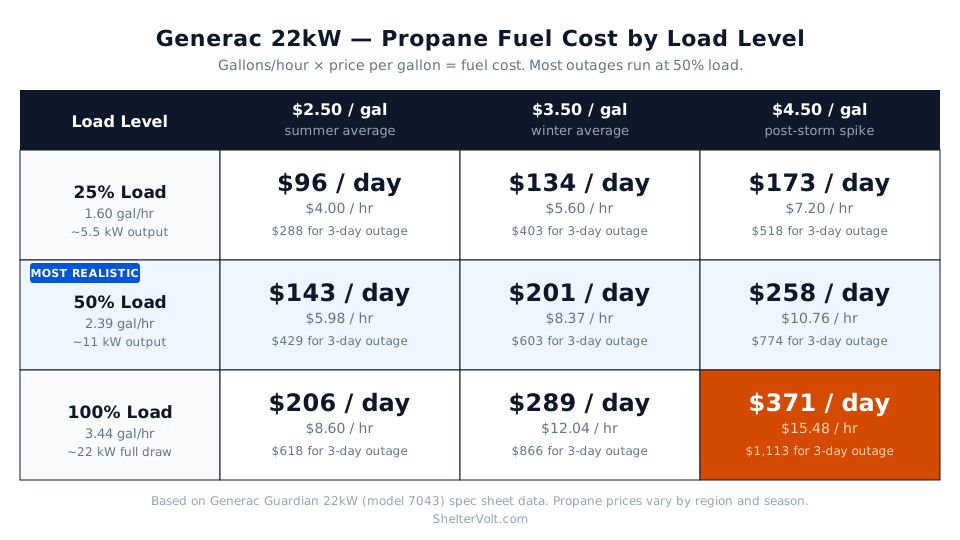
Here’s the cost math across three propane price points. Propane averages $2.50–$3.50/gallon nationally, but prices spike in winter and after major supply disruptions — $4.50/gallon is not unusual in January in cold climates.
At $2.50/gal:
- 25% load: $4.00/hr, $96/day
- 50% load: $5.98/hr, $143/day
- 100% load: $8.60/hr, $206/day
At $3.50/gal:
- 25% load: $5.60/hr, $134/day
- 50% load: $8.37/hr, $201/day
- 100% load: $12.04/hr, $289/day
At $4.50/gal (winter spike):
- 25% load: $7.20/hr, $173/day
- 50% load: $10.76/hr, $258/day
- 100% load: $15.48/hr, $371/day
The takeaway: a three-day outage at 50% load and $3.50/gallon costs $603. At $4.50/gallon — likely in the kind of winter storm that causes extended outages in the first place — that’s $774. These aren’t worst-case numbers. They’re what the math says.
One practical move: buy propane in summer. Prices drop significantly from April through September as heating demand falls. Refilling a 1,000-gallon tank in July versus January can save $400–$800 on that single fill.
Propane vs. natural gas for standby generators
If your home has natural gas service, a natural gas standby generator is almost always the better choice. You eliminate the tank, the delivery logistics, and the seasonal price variability. The generator draws from the utility line continuously.
The counterargument: natural gas infrastructure can fail in major events. Extended winter storms, earthquakes, and pipeline disruptions have interrupted gas service for days or weeks in affected areas. A natural gas generator goes silent if the line goes down.
Propane doesn’t share that risk. A full 1,000-gallon tank is 17 days of fuel sitting in your backyard, independent of any utility. For rural properties — where natural gas isn’t even an option — propane is the only answer.
The home generator sizing calculator can help you model your load and compare these options based on your actual usage.
Don’t forget maintenance costs
Generac requires annual dealer maintenance to keep the warranty valid, regardless of how many hours the generator has run. That service call typically runs $150–$300/year depending on your region and dealer.
Add that to the fuel cost when you’re calculating what backup power actually costs you. A generator that sits idle for ten years still needs ten maintenance visits. If you’re paying $250/year in maintenance and never lose power, you’ve spent $2,500 by the time the first outage hits. When power does go out, add $600 in propane for a three-day outage. Total cost of ownership matters.
The battery alternative: different math, different use case
A 13.5 kWh Tesla Powerwall 3 charged by solar covers three days of survival loads — refrigerator, lights, phone charging, CPAP — for essentially $0 in fuel cost after the initial hardware investment. No propane deliveries, no annual maintenance contracts, no meter reading.
The propane generator still wins on raw capacity. A 22kW generator can run your HVAC, your well pump, your full kitchen. A Powerwall covers essentials. They’re solving different problems.
But if you’ve been running the math on a 22kW propane generator and the numbers are uncomfortable, it’s worth doing the same exercise for a battery system sized to your essential loads. The what size battery to backup a house for 3 days article walks through that calculation.
Three days of propane for a 22kW generator can cost $400–$800. If that number surprises you, it’s worth doing the math on whether a home battery covers your essential loads more cheaply: what size battery to backup a house for 3 days.