Standby generator buying guide
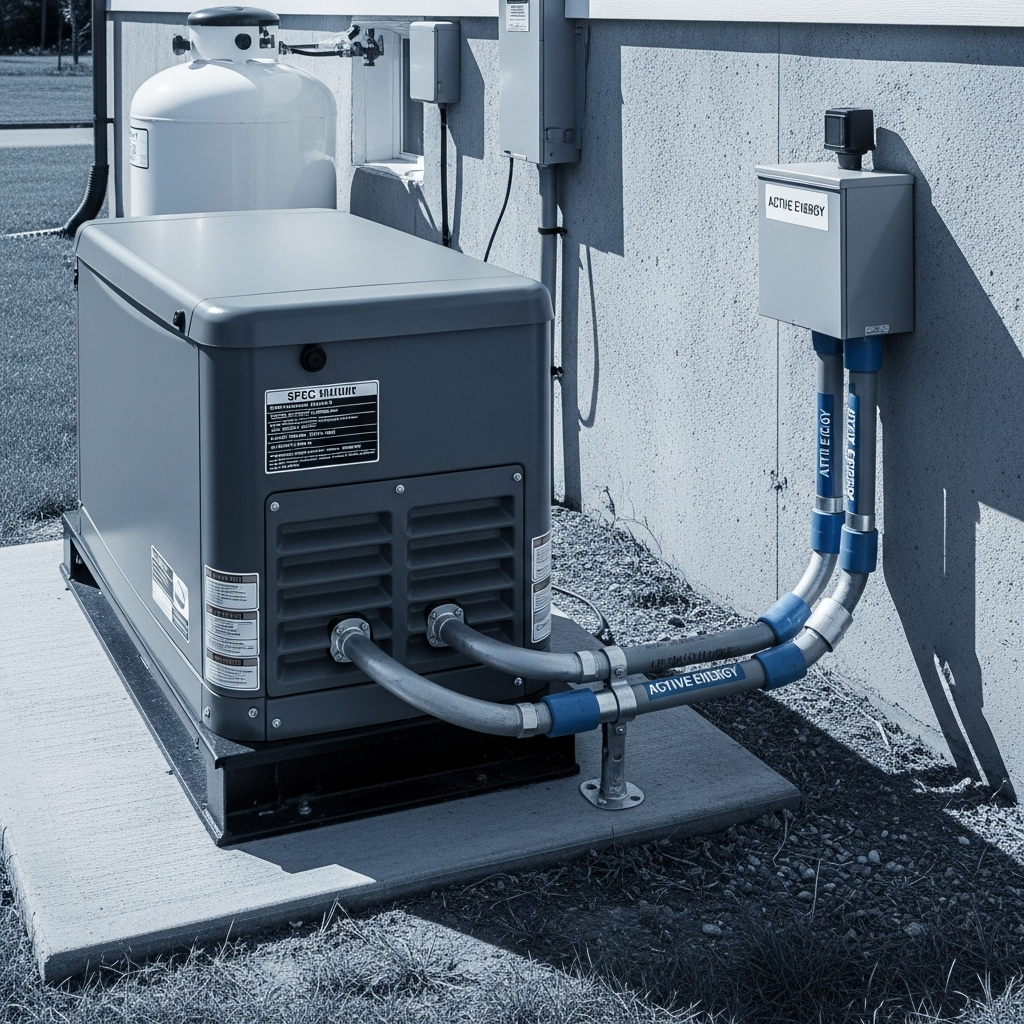
The sticker price is the most misleading number in this purchase. A 22kW Generac looks reasonable at $3,500 until you add the transfer switch, the electrician, the gas line extension, the permits, and the propane tank. Then you’re at $12,000 before you’ve run the thing for a single hour.
That’s the conversation most generator salespeople don’t want to have. This guide does.
What a standby generator actually is
A standby generator is a permanently installed unit connected to a fixed fuel supply — natural gas from your utility line or liquid propane from a tank on your property. It sits outside, bolted to a concrete pad, connected to your electrical panel through an automatic transfer switch. When the grid goes down, the generator starts itself, the transfer switch disconnects your home from the utility line, and power is restored inside your house within 10 to 30 seconds.
No manual startup. No extension cords. No going outside in a storm with a flashlight.
That’s what separates a standby from every portable generator on the market. You can be asleep, at work, or out of town when the power goes out and it won’t matter. The generator handles it.
The automatic transfer switch is the hardware that makes this possible — worth understanding before you get quotes.
Air-cooled vs. liquid-cooled engines
This decision drives a huge chunk of your cost, and most buyers don’t understand it going in.
Air-cooled engines cover most residential standby generators — units from about 7.5kW up to 26kW. They use aluminum engine blocks and rely on airflow around the fins to manage heat. Fine for occasional use: outages, weather events, the kind of situation where you run 50–200 hours in a year. Purchase price ranges from $3,000 to $6,000 for the hardware alone. Air-cooled engines are rated for 200–500 hours per year of operation.
Liquid-cooled engines are commercial-grade — cast-iron blocks, continuous-operation ratings, and a price tag to match. Hardware starts around $8,000 and goes past $20,000 for larger units. If you’re running a large home, a well pump in an agricultural setting, or you need genuinely continuous backup power, liquid-cooled is what you need. For a typical suburban homeowner who loses power six times a year, it’s probably overkill.
The honest answer for most residential buyers: air-cooled at the right kW rating is sufficient. Don’t let a dealer upsell you to liquid-cooled unless your actual load requirements justify it.
Natural gas vs. liquid propane
Both work. Each has a trade-off that matters depending on your situation.
Natural gas is the simpler option if you have a gas utility line within reasonable distance of where the generator will be installed. Your fuel supply is effectively unlimited — you’ll never run out because you forgot to call the propane supplier. No tank rental. No delivery scheduling. The downside is real: in a serious regional disaster — earthquake, major hurricane — gas utility pressure can be interrupted or cut off entirely. If you’re preparing for the scenario where infrastructure is genuinely down for days, natural gas is not as reliable as having a full propane tank on your property.
Liquid propane gives you a physical fuel reserve you control. The trade-off is ongoing cost and logistics. Expect to pay $50–$100 per year in tank rental fees for a 500-gallon tank. Propane prices fluctuate, but plan on $2.50 to $4.00 per gallon as a realistic range depending on your region and market timing.
Here’s the number that should actually guide your sizing decision: a 22kW Generac running at 50% load burns about 2.6 gallons of propane per hour. A full 500-gallon tank gives you roughly 65 to 70 hours of runtime at that load. That’s about three days of continuous operation, or considerably longer if you’re cycling the generator on and off. A 250-gallon tank halves that. For most outage scenarios that number is fine. For extended grid failures, it may not be enough.
A 500-gallon tank is the minimum worth installing. The 250-gallon tanks that get quoted to save money upfront will leave you short in exactly the situations where you need the generator most.
What installation actually costs
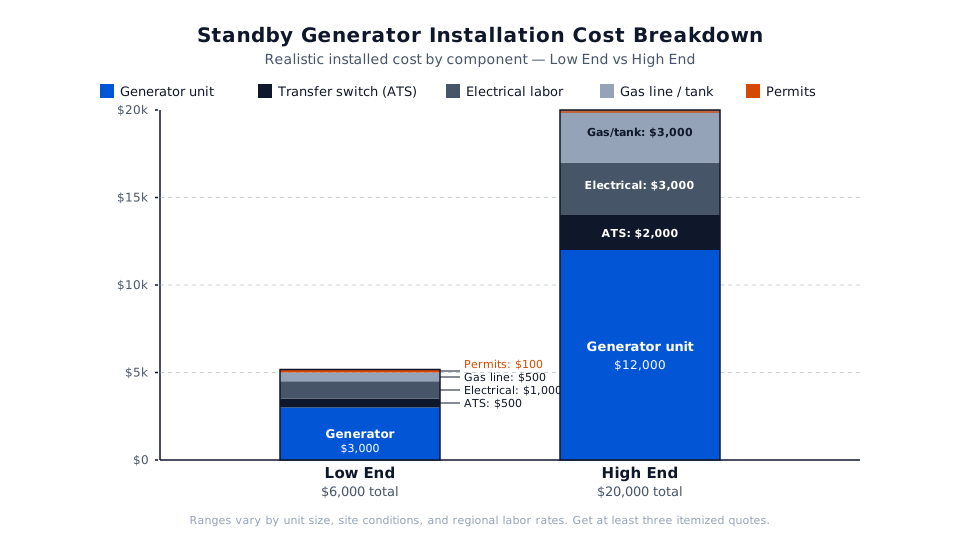
This is where buyers consistently get surprised. Below are realistic installed cost ranges broken out by line item.
| Cost component | Low end | High end |
|---|---|---|
| Generator unit | $3,000 | $12,000 |
| Automatic transfer switch (if not included) | $500 | $2,000 |
| Electrical labor (licensed electrician) | $1,000 | $3,000 |
| Gas line extension or propane tank install | $500 | $3,000 |
| Permits and inspections | $100 | $500 |
| Total installed | $6,000 | $20,000 |
The wide range is real. A 12kW air-cooled unit installed on a house that already has natural gas at the exterior wall, with a short run to the main panel, might land at $6,000–$8,000. A 22kW propane unit on a house that needs a new 500-gallon tank installed, a 60-foot gas line run, and a 200-amp transfer switch can easily hit $18,000–$20,000.
Get three quotes. Ask each contractor to break out the line items. Bundled quotes are harder to evaluate and easier to inflate.
The fuel cost you’ll pay forever
This is the number manufacturers never put in their marketing materials.
Every hour your generator runs, you’re burning fuel. At 50% load — which is realistic for a whole-home standby running during a typical outage — a 22kW unit burns about 2.6 gallons of propane or roughly 200 cubic feet of natural gas per hour.
If propane averages $3.00/gallon, that’s $7.80 per hour of runtime. Run the generator for 72 hours during a three-day outage: $562 in fuel alone, just for that one event. On natural gas, the equivalent run might cost $30–$40 at average utility rates — which is one of the legitimate arguments for gas.
None of this is a reason not to buy a standby generator. It’s a reason to go in with your eyes open and to use the home generator sizing calculator to avoid buying a generator 30% bigger than you need, which burns proportionally more fuel on every outage.
Mandatory maintenance: the annual bill nobody mentions
Standby generators require a maintenance visit every year whether or not they’ve run. The oil, air filter, and spark plugs degrade on a calendar schedule, not just a runtime schedule. Most manufacturers make dealer-performed maintenance a condition of their warranty coverage.
Budget $150 to $300 per year minimum for annual maintenance. That’s on top of any repair costs if something goes wrong. Over a 15-year lifespan, you’re looking at $2,250–$4,500 in maintenance before a single unplanned repair.
Generac requires annual dealer service for warranty purposes. Kohler is similar. If you’re buying a unit and planning to have your neighbor’s kid do the oil changes, you may be voiding the warranty — check the terms before assuming otherwise.
Sizing: don’t guess
Generator sizing is a calculation, not a gut feeling. A licensed electrician performs a load calculation per NEC Article 220 to determine the right kW rating for your home. Any contractor who sizes a generator by “walking through your house” without doing the math is guessing.
A few rules of thumb that are actually useful:
- 12–18kW covers a 2,500–3,500 square foot home with gas heat and no electric dryer
- 20–22kW handles central AC plus a well pump
- Homes with electric resistance heat, electric water heaters, or hot tubs need considerably more capacity
Before you can size correctly, you need to understand the difference between starting watts vs running watts — particularly for motors like well pumps and air conditioner compressors, which draw two to three times their running load at startup. A 22kW generator can be overloaded by a single well pump and a central AC unit starting at the same moment if the math isn’t done correctly.
The home generator sizing calculator can give you a solid starting estimate before you call contractors.
The brand question
Generac controls roughly 75% of the residential standby market. That scale has real advantages: dealer network coverage, parts availability, and technicians who’ve seen every failure mode. But market dominance doesn’t mean best product.
The honest breakdown:
Generac is the default choice — lower hardware cost, extensive dealer network, technicians everywhere. The 7000 and 800 Series air-cooled units are the workhorse of the category. The downside: build quality has been inconsistent, and their customer service reputation is genuinely mixed.
Kohler is the premium alternative. Better engine blocks, better fit and finish, more reliable over a long service life in most independent assessments. Hardware costs more and dealer coverage is thinner in some regions — but if you have a solid local dealer, the argument for paying the premium is real.
Cummins is commercial-grade. Right for large homes and agricultural applications; overkill for most suburban buyers.
Briggs & Stratton went bankrupt in 2020 and was acquired. Parts availability has been spotty since. Avoid for new installations.
Champion makes budget portables and has pushed into standby. Not recommended for permanent standby use — the service track record isn’t there yet.
The noise issue
Standby generators run at 60–70 dB(A) measured at 23 feet — roughly equivalent to a normal conversation, well below a lawnmower. That’s tolerable during a storm outage at 2 AM. It’s less tolerable during a weekly self-test cycle on a Sunday morning, or an extended summer outage when neighbors are outside.
Most residential zoning ordinances cap exterior noise at 55–65 dB(A) during daytime hours. HOA rules can be stricter still. Check both before you buy. Most codes also require setbacks — typically 5 feet from openings and 18 inches from the house — which may force the unit farther from your panel and add to electrical labor costs.
The real question before you buy
Most of the standby generator marketing you see is aimed at selling you the product, not helping you decide if it’s the right product for your situation.
The honest question: how often do you actually lose power, for how long, and what does it cost you? If you’re losing power twice a year for four-hour stints, a $12,000 installed standby generator is a bad financial decision. A portable generator and a manual transfer switch at $2,000–$3,000 all-in might be the smarter call.
Standby generators make the most sense when you have specific reliability requirements: a well pump that will drain dry without power, medical equipment that can’t tolerate interruption, a vacation property you won’t be at during an outage, a home office where downtime has real dollar consequences. In those situations, the automatic operation and permanent installation are worth the price premium.
If you’re buying one because it sounds like a good idea and you’ve had a few bad storms, run the math first. The fuel and maintenance costs alone will tell you a lot.
The next question after sizing is which brand gives you the best value for the long haul. Hint: it’s not always the market leader.