The Federal Solar and Battery Tax Credit Ended in 2025: What Homeowners Need to Know
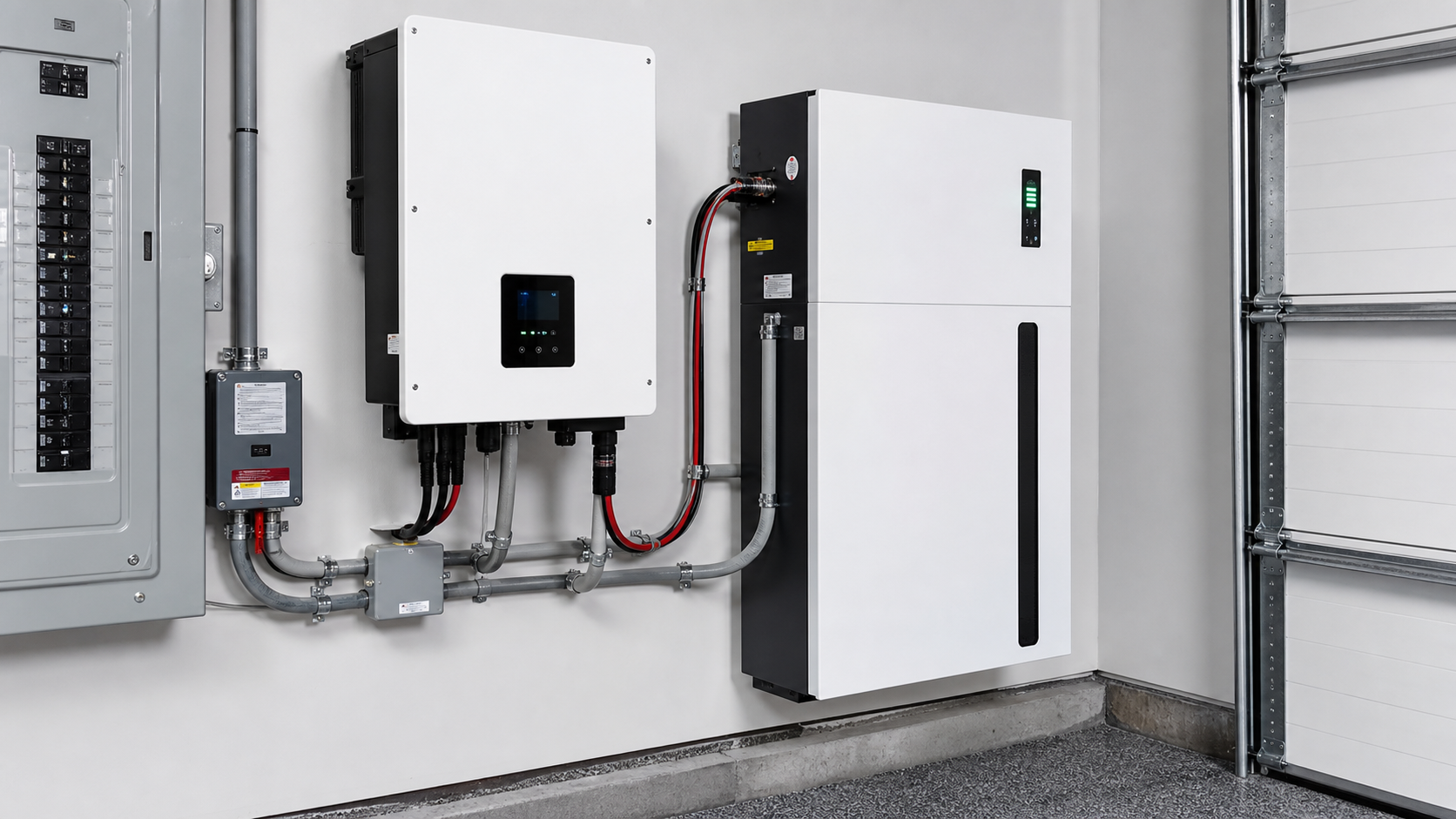
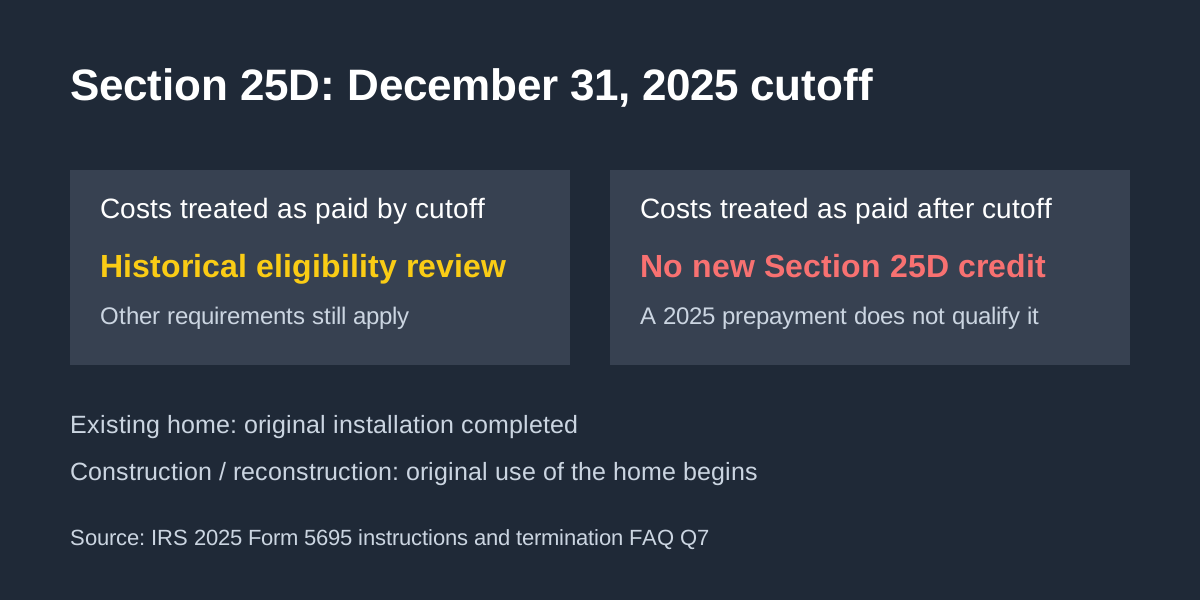
A home solar or battery installation completed in 2026 does not earn a new federal Residential Clean Energy Credit under Section 25D. The 2025 IRS instructions end the credit for expenditures made after December 31, 2025. Qualifying solar property had a 30% rate in 2022–2025; the standalone battery category began in 2023. Do not apply the solar start date to a standalone battery.
If a current quote assumes a federal 30% discount, ask for the full installed cost without it. Our maintained battery-storage tax-credit guide now separates historical eligibility, 2025 filing, unused-credit carryforward, and new purchasing decisions.
This article is general information, not tax advice. The relevant installation or original-use date, equipment, tax situation, and any state or utility program can all matter. Ask a qualified tax professional about a real project.
The important date is when installation was completed
For an existing home, the IRS treats costs as paid when original installation is completed. For costs connected with constructing or reconstructing a home, the timing rule is when your original use of that home begins. A deposit, signed contract, or full prepayment in 2025 does not make a project completed after the cutoff eligible. The IRS termination FAQ, question 7 addresses that directly.
An installer’s commissioning records, invoices, and inspection documents can help establish the facts. None is a universal substitute for the IRS timing rule. Get the actual dates reviewed rather than relying on a salesperson’s description of a project as “started” or “paid for.”
What was covered under the former credit?
During the applicable period, the credit covered qualified residential clean-energy property, including qualifying solar-electric property and battery storage with at least 3 kilowatt-hours of capacity. The IRS describes the historical program and documentation in the current guidance; use that primary source rather than assuming every item on an invoice qualified.
The key point for a 2026 homeowner is not to recreate a 2025 calculation. It is to separate two questions:
- Were the expenditures treated as made within the eligible period under the IRS timing rules?
- What incentives, if any, are available now from your state, utility, or other program?
Those are different programs with different rules. A local incentive does not revive the expired federal credit, and an old federal-credit estimate should not be presented as a discount from today’s installation price.
How to update a solar or battery budget
Ask every vendor to provide a version of the proposal that does not assume an unavailable federal tax credit. Then compare the real out-of-pocket cost, financing terms, expected production or backup value, equipment warranty, and any currently available local incentives.
For a qualifying past battery installation, use the corrected battery-storage tax-credit guide and 2025 Form 5695 walkthrough. The portable power station guide also explains why capacity or a brand name alone does not prove eligibility.
Unused eligible credit from 2025 can carry into 2026, as the 2025 instructions expressly provide. That is previously earned credit, not eligibility for another system installed in 2026. Use the applicable tax-year form and tax-liability calculation; the credit is nonrefundable and does not automatically equal a cash rebate.
Be careful with “final chance” and “still qualifies” language
Sales material often blends a historical federal incentive with a live project quote. Ask the seller to identify the exact program, the government entity administering it, the eligibility date, and whether the number is a tax credit, rebate, financing assumption, or estimate. If the answer is “the federal 30% credit,” compare it against current IRS guidance before relying on it.
There may still be state, local, utility, or manufacturer programs worth investigating. They are not interchangeable with a federal income-tax credit. A rebate may have a reservation deadline or a budget cap; a utility program may depend on your service territory; a financing promotion may not be an incentive at all. Build each item as a separate line in the budget so an expired federal program does not silently distort the project economics.
If a project was completed close to the former deadline, do not rely on a salesperson’s general description of completion. Give the installer’s commissioning and permission-to-operate documents to the tax professional preparing the return. Those records are a much better starting point than a memorable promise from an old proposal.
Documents worth keeping
Whether you are reviewing a 2025 project or a current installation, retain:
- signed contract and change orders;
- itemized invoices and proof of payment;
- installation-completion records and, for construction or reconstruction, records of original use;
- equipment specifications and warranties;
- records for any state, utility, or local incentive; and
- the advice and workpapers used to prepare your return.
Good records do not create eligibility, but they make it possible for a tax professional to evaluate the correct program and period.
Your next step
Ask for a quote without the expired federal discount. For a past claim, collect the installation or original-use records and the correct tax-year instructions, then have a tax professional review the project before you file.