Do whole house generators qualify for tax credit?
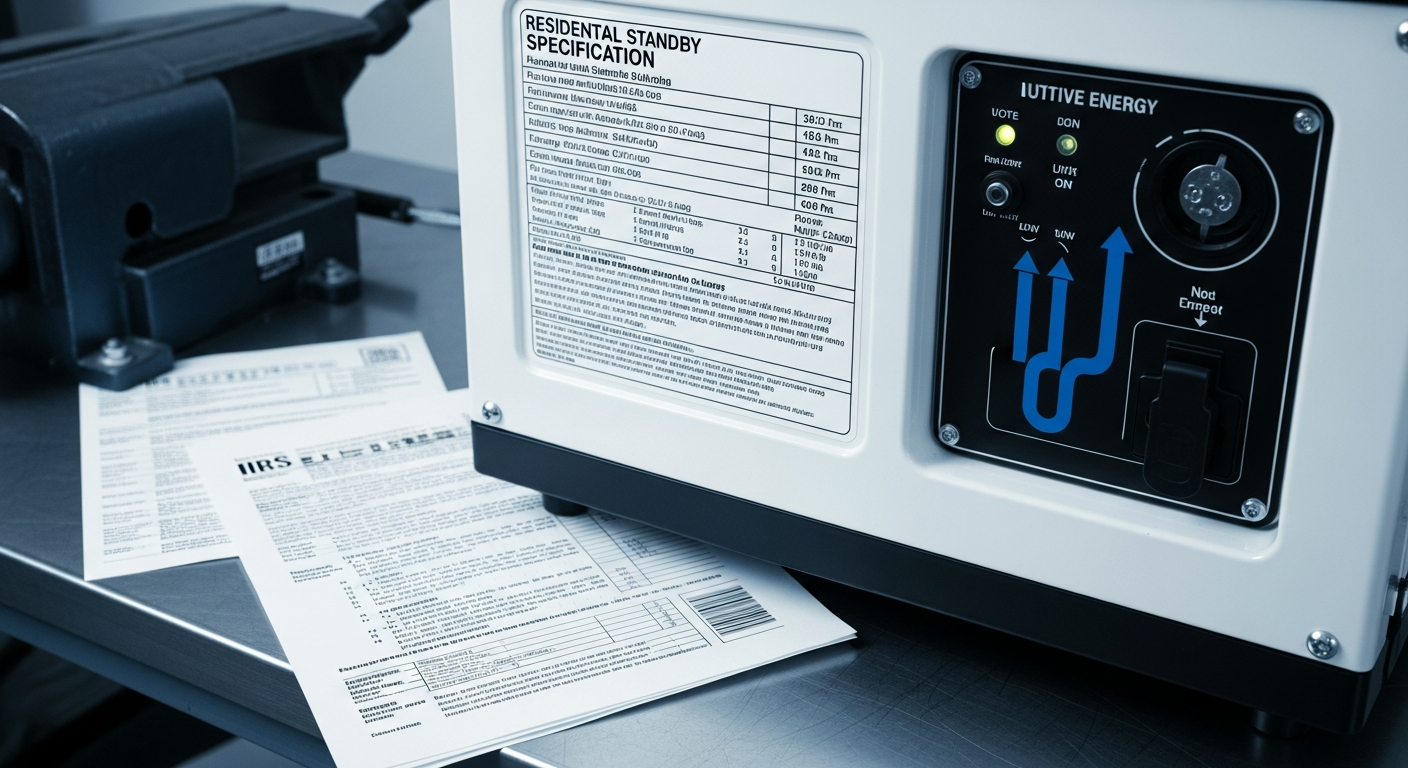
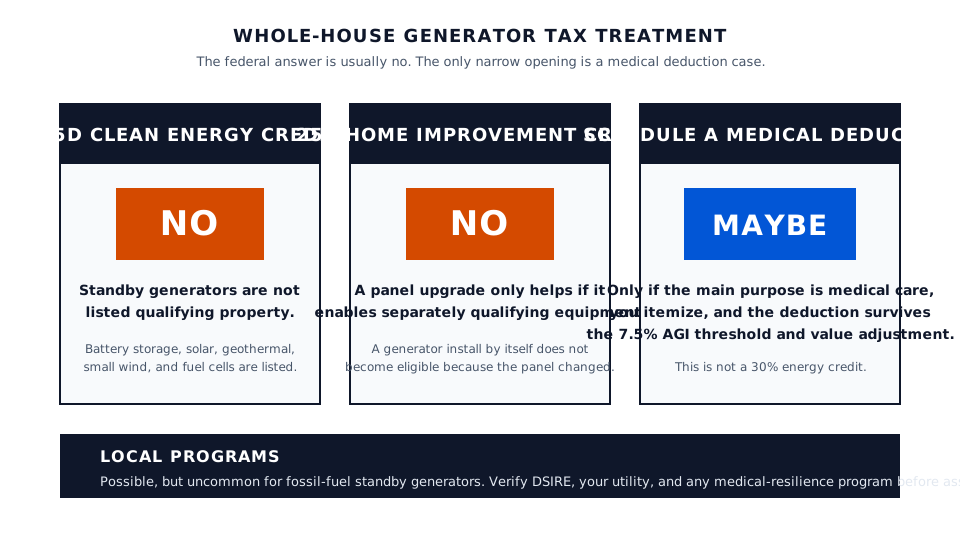
No. A normal whole-house generator from Generac, Kohler, Cummins, Briggs, or Champion does not qualify for the federal home energy tax credits. The historical IRS credit lists cover things like battery storage, solar, geothermal, fuel cells, high-efficiency furnaces, and certain panel upgrades. Engine-driven standby generators are not on those lists.
That answer disappoints people because a standby generator is expensive enough that a 30% credit would change the math in a hurry. But the tax code is not treating a propane or natural-gas generator as clean energy property. For a new 2026 project, batteries do not earn a new Section 25D credit either: that credit ended for expenditures made after December 31, 2025. The battery storage tax credit guide separates historical eligibility and unused-credit carryforward from today’s purchasing decision. I’m talking here about a generator for a personal residence, not a separate business or rental-property tax situation.
The two federal credits people confuse
When homeowners search this question, they are usually mixing up two separate credits:
- The Residential Clean Energy Credit, claimed on Form 5695. The IRS instructions list solar electric, solar water heating, small wind, geothermal heat pumps, battery storage technology, and fuel cell property.
- The Energy Efficient Home Improvement Credit. The IRS list there covers qualifying heat pumps, water heaters, furnaces, boilers, biomass equipment, and in some cases panelboards or feeders that enable that qualifying equipment.
A standby generator is neither of those things. It is not battery storage. It is not a qualifying furnace. And it is definitely not “fuel cell property.” The IRS uses that term for an electrochemical electricity system, not a gas engine spinning an alternator.
So does the IRS cover Generac?
No, not for a normal residential standby generator. Whether the badge says Generac, Kohler, Cummins, or Briggs does not matter. Fuel type does not save it either. Natural gas, propane, gasoline, and diesel standby units all miss the federal home energy credits for the same reason: they are combustion equipment, not qualifying clean-energy or efficiency property.
If an installer tells you the panel upgrade or transfer switch is the part that qualifies, slow down. For eligible property placed in service through December 31, 2025, a panelboard upgrade could qualify under the home-improvement credit only when it enabled separate listed equipment and met the other requirements. The 2025 IRS instructions also end new Section 25C credits for property placed in service after that date. Installing a 200-amp panel so you can feed a standby generator does not magically turn the generator project into eligible property.
The one narrow exception people hear about
This is the part that creates the myth. IRS Publication 502 says you can include amounts paid for special equipment installed in a home, or for improvements, if the main purpose is medical care. It also says the deductible amount for a permanent improvement is reduced by any increase in your home’s value.
That is not a generator credit. It is a possible itemized medical deduction on Schedule A. Very different animal.
For a standby generator to fit this lane, you would usually need all of the following:
- A real medical reason, such as keeping prescribed equipment running during outages
- A doctor who will document that need
- A tax situation where you actually itemize deductions
- Medical expenses high enough to exceed 7.5% of your AGI
- A tax professional willing to sign off on how much of the generator cost is deductible after any home-value increase
Publication 502 also says operation and upkeep of a capital asset can qualify when the main reason is medical care. That is why people start talking about fuel, maintenance, and repair costs in these cases. But this is exactly where you stop taking advice from generator dealers and start talking to a CPA.
Are there state rebates for gas generators?
Do not assume there is a state version of the federal credit waiting for you. Most of the meaningful state and utility incentives are aimed at batteries, solar, heat pumps, weatherization, or medically vulnerable customers, not fossil-fuel standby generators.
That does not mean zero local help exists. It means you need to verify, not assume. The fastest places to check are:
- DSIRE for state and utility incentive listings
- Your utility’s outage-preparedness or medical-baseline program pages
- Your state energy office
- County or state emergency-management programs if the generator is tied to medical resilience
If a contractor says “there’s probably a rebate,” ask for the exact program name before you let that claim into your budget.
What to do before you buy
If the tax angle is driving your decision, here is the blunt version:
- Buy a whole-house generator because you need automatic backup for a well pump, sump pump, medical device, or a house that cannot sit dark for long stretches. Do not buy it because you think the IRS will reimburse 30%.
- Get a line-item quote and compare the no-credit generator cost against systems in best whole house battery backup and the Anker Solix F3800 home integration guide.
- If the case is medical, get the doctor’s documentation first and run it past a tax professional before installation, not next April after the money is gone.
The tax break on a generator is usually zero. The decision still might make sense. It just needs to make sense on reliability, not wishful tax math.
If you’re still weighing generator size, installed cost, and what loads really matter, read the standby generator buying guide next and then run your numbers through the home generator sizing calculator.