Starting watts vs running watts
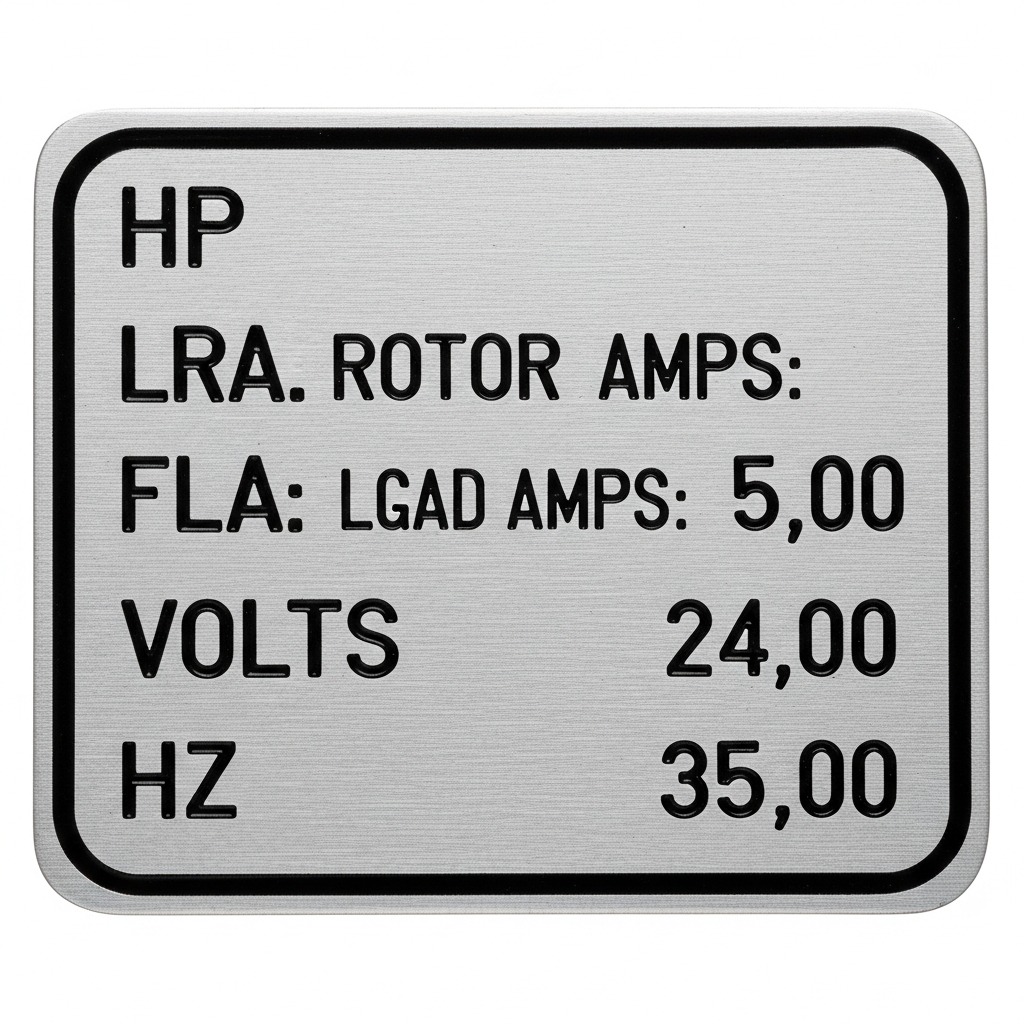
Running watts are what an appliance draws once it’s up and operating normally. Starting watts are the brief surge that electric motors demand at the moment they kick on — often 2 to 7 times higher than the running draw. If you size a generator based only on running watts, the first time your well pump starts up, you’ll trip the overload and lose power to everything.
This is the single biggest reason people buy the wrong generator. Use our home generator sizing calculator to run the actual numbers — but first, read this, because the calculator only works if you understand what you’re feeding into it.
What running watts actually means
Running watts (also called “continuous watts”) is the steady-state power an appliance consumes. A 1-HP well pump running at full load draws about 746 watts. A window AC unit might draw 1,200 watts on a hot afternoon. A refrigerator compressor cycles at around 150 to 200 watts once it’s been running for a few seconds.
These are the numbers on the spec sheet. These are also the numbers that trip people up, because they assume this is all they need to account for.
The startup spike
Electric motors — the kind inside refrigerators, air conditioners, well pumps, sump pumps, freezers, and air compressors — don’t spin at full speed the instant power hits them. They’re fighting inertia. At the moment of startup, the motor is essentially stalled, and a stalled motor acts like a short circuit.
The current that flows during that brief stall is called “Locked Rotor Amps” or LRA. You’ll see it on the motor’s nameplate, right next to the running amperage (FLA, or Full Load Amps). The ratio of LRA to FLA tells you how aggressive the startup surge is.
A typical 1-HP well pump with an FLA of around 6 amps at 240V (about 1,440 watts) can have an LRA of 18 to 24 amps — which is 4,320 to 5,760 watts for a fraction of a second at startup. That fraction of a second is what kills an undersized generator.
Real numbers from real equipment
Here’s what a startup surge actually looks like on common household equipment:
1-HP well pump (746W running): Starting surge typically 3,500 to 5,000 watts. The LRA on a standard single-phase motor is 5 to 7 times the FLA. If your pump runs fine on 1,500W but surges to 4,500W at startup, a 3,000W generator will fail every time it tries to prime the pump.
3-ton central AC (roughly 3,500W running): Starting surge typically 9,000 to 12,000 watts. This is why most portable generators can’t start a central AC at all — not because of the running load, but because the compressor’s startup spike exceeds the generator’s peak output.
Refrigerator (150 to 200W running): Starting surge typically 800 to 1,200 watts. This sounds manageable, but remember: the compressor cycles on and off every 20 to 30 minutes. Every time it cycles, you get another surge.
Chest freezer (100 to 150W running): Similar surge profile to a refrigerator — 4 to 6x multiplier at startup.
Sump pump (1/3 HP, about 250W running): Starting surge typically 750 to 1,500 watts. And sump pumps cycle frequently during heavy rain, which means repeated surges exactly when you need reliable power the most.

What doesn’t surge
Not everything spikes at startup. Resistive loads — devices that convert electricity directly to heat — draw their full wattage the moment they turn on, but they don’t surge beyond that.
- Electric space heaters: no surge
- Toasters, hair dryers, coffee makers: no surge
- Incandescent and LED bulbs: no surge
- Laptop and phone chargers: no surge
- EV chargers (Level 1 and Level 2): no surge
If your only backup power needs are lights, phone charging, and a space heater, you can size strictly to running watts. But add one refrigerator and you’ve introduced a motor load, and everything changes.
The multiplier rule (and when it breaks down)
The common advice is: motors need 2 to 3 times their running watts to start. That’s true for modern, efficient motors under normal conditions. But it breaks down in several situations:
Worn or older motors: As a motor ages, starting efficiency decreases and the LRA-to-FLA ratio can climb. A 15-year-old well pump motor may surge harder than a new one with the same nameplate rating.
Hard-start compressors: AC compressors and refrigeration compressors under load at startup can hit 5 to 7x their running draw. This is common in heat pump systems and any AC that has lost refrigerant — a low-refrigerant system works the compressor harder on every startup.
Large motors (3HP+): Air compressors in the 3HP to 5HP range can demand peak starting currents that dwarf even their already high running loads.
The safe approach is to find the actual LRA on the motor nameplate or manufacturer spec sheet, multiply by the voltage, and use that number for sizing. Don’t guess.
How to find starting wattage for your equipment
The motor nameplate is bolted to the motor housing itself — not the appliance label, not the documentation. For a well pump, the nameplate is usually on the motor section of the pump unit. For a refrigerator or AC compressor, it’s on the compressor housing inside the appliance.
Look for two numbers:
- FLA (Full Load Amps): The running current draw
- LRA (Locked Rotor Amps): The startup surge current
Multiply LRA by the voltage (120V or 240V depending on the circuit) and you have starting watts. Multiply FLA by voltage for running watts.
If the nameplate is inaccessible or worn, search the model number plus “LRA spec sheet” — manufacturers publish this data. For well pumps, Franklin Electric and Goulds both maintain searchable databases.
How this changes your purchase decision
Here’s where sizing math gets real. Say you need to run a refrigerator and a 1-HP well pump. On paper:
- Refrigerator running: 200W
- Well pump running: 750W
- Total running: 950W
A 1,000W generator sounds like enough. It isn’t.
You need to account for the largest single starting surge on top of the total running load:
- All other loads running: 200W (refrigerator, already running)
- Largest single surge: 4,500W (well pump starting)
- Required generator output at that moment: 4,700W
A 5,000W generator with a 6,000W surge rating handles this. A 3,000W generator does not, even though you only need 950 running watts once everything is up.
The rule: add up all running loads, then add the largest single surge requirement. That sum is your generator’s minimum surge capacity.
For whole-house transfer switch setups, you run this same analysis for every circuit you’re backing up.
Soft starters: a way to cut surge requirements
If you’re trying to use a smaller generator — or a solar generator for home backup, which often have lower surge capacity than gasoline units — a soft starter can make it work.
Devices like the Micro-Air EasyStart wire into an AC compressor or well pump motor and ramp up the voltage slowly, reducing the LRA spike dramatically. A 3-ton AC that normally surges to 10,000W at startup might only surge to 2,000W with an EasyStart installed. The cost runs $300 to $500 per unit, but it can mean the difference between a generator that handles your HVAC and one that shuts down every time the compressor cycles.
Soft starters are worth it if you’re buying a portable inverter generator (which have lower surge ratings) or sizing a solar-plus-battery system where surge capacity is a hard constraint.
Now that you know why starting watts matter, plug your numbers into our home generator sizing calculator to find the right system size.