Transfer switch for generator guide
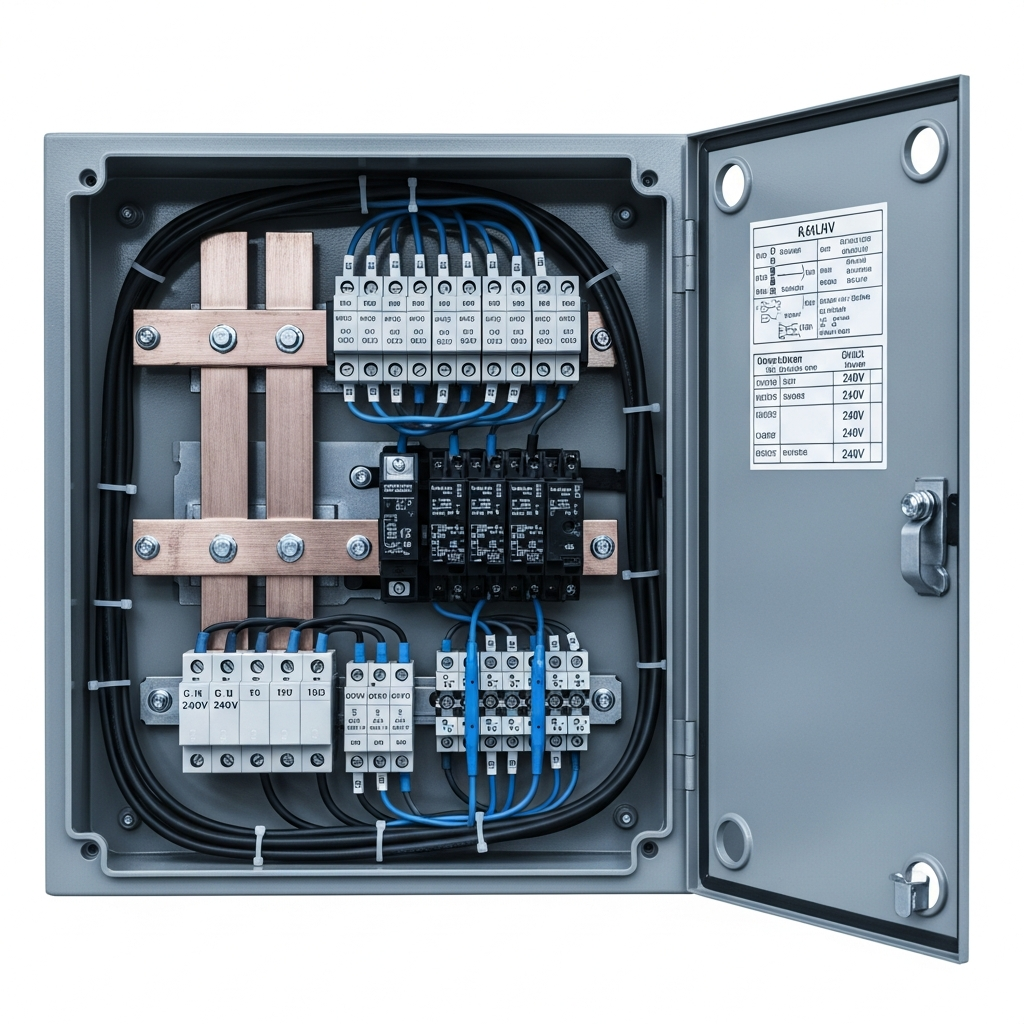
Before you buy a generator, figure out the transfer switch. That’s the hardware nobody talks about until an electrician drops a $1,500 quote in your lap and you have no idea if it’s reasonable.
The transfer switch is what legally and physically connects your backup power to your home’s wiring. Get it right before you shop, and you’ll know exactly what to ask for. Get it wrong, and you’ll either overpay for equipment you didn’t need or end up with a code violation.
What a transfer switch actually does
Your home connects to the utility grid through the main breaker in your panel. Your backup generator or battery connects through a separate input. The transfer switch sits between these two sources and makes sure they are never connected at the same time.
This matters a lot. If your generator feeds power into your panel while the utility is also connected, that power flows back through your meter and out onto the street. It energizes the utility lines. Linemen working to restore power during an outage can be killed by this. It’s called back-feed, and it kills people.
The transfer switch physically prevents this. When backup power is active, utility power is disconnected. When utility power returns, the generator is disconnected before the grid reconnects. This is not a feature — it’s the law.
Why you legally need one
NEC Article 702 covers Optional Standby Systems, which is the category that home backup generators fall under. It requires that standby power sources have a means to prevent interconnection with normal power sources — a transfer switch.
Running a generator through an extension cord plugged into a dryer outlet, or using a dual-male “suicide cord” to backfeed your panel, is a code violation. It’s also genuinely dangerous to you, your neighbors, and utility workers. Local building authorities (your AHJ — Authority Having Jurisdiction) can require removal of non-compliant installations and may void your homeowner’s insurance coverage if there’s a fire.
The transfer switch requirement is not negotiable. The only real question is which type fits your situation.
The three types of transfer switch
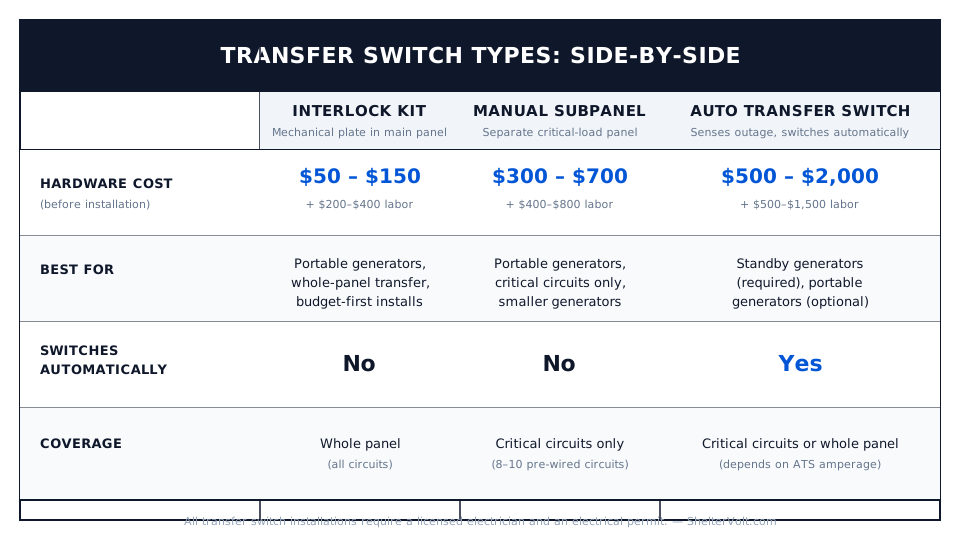
Interlock kit ($50–$150 + install)
An interlock kit is a metal plate that mounts inside your existing main panel. It physically prevents the main breaker and a dedicated generator breaker from being ON at the same time. When you push the main breaker down to disconnect the grid, the plate slides into position and blocks the main breaker from coming back up while the generator breaker is on.
That’s it. No new subpanel. No complicated wiring runs. Just a mechanical constraint built into your existing panel.
The generator plugs into an inlet receptacle (usually an L14-30R or L14-50R) mounted on your exterior wall, connected to that dedicated generator breaker. When an outage hits, you go outside, start the generator, come back in, flip the main breaker off, flip the generator breaker on, and your whole panel runs on generator power.
Cost for parts: $50–$150. Installation is typically 2–4 hours of electrician time, so budget another $200–$400 in labor depending on your area.
The catch: you’re running your entire panel on the generator. If your panel pulls more than the generator can supply, you’ll trip the generator’s overload protection. You need a generator large enough to handle your total critical load — or you need to be disciplined about what you leave running. Read up on sizing your backup power system before going this route.
Interlock kits are legal under NEC 702, but some local jurisdictions have stricter rules. Check with your AHJ before buying one.
One more thing: not every panel has a compatible interlock kit. The plate is panel-specific. Square D, Eaton, Siemens, and Leviton all make panel-specific kits, but older or off-brand panels may have no compatible option.
The interlock kit is the right answer for a lot of homeowners. For a deeper look at when it works and when it doesn’t, see our full interlock kit vs transfer switch breakdown.
Manual transfer switch / subpanel ($300–$700 + install)
A manual transfer switch is a separate small panel, installed next to your main panel, that contains 8–10 pre-wired circuits for your critical loads. Your electrician moves those circuits from your main panel into the transfer switch subpanel: refrigerator, well pump, furnace blower, some lights, a few outlets.
During an outage, you go to the transfer switch, flip the main lever to “generator,” and those 10 circuits transfer. Everything else in the main panel stays off. Only the circuits in the subpanel get backup power.
This approach costs more upfront than an interlock kit — the Reliance Controls 10-circuit manual transfer switch runs around $300–$500 for the hardware alone, plus $400–$800 or more in labor to rewire the selected circuits. But it has real advantages.
You don’t need a massive generator. You’re only running 10 circuits, not 40. That means a 5,500–7,500 watt portable generator can comfortably power a refrigerator, some lights, a well pump, and a window AC unit. The smaller load also makes it much harder to accidentally overload the generator.
The circuits in the subpanel are fixed. Your electrician selects them with you beforehand based on your priorities. If “staying warm” and “keeping food cold” are the only goals, that guides which circuits move over.
The manual part means you have to physically flip the switch. If you’re home, that’s no problem. If you’re traveling during a winter storm, you need someone to do it for you.
Automatic transfer switch (ATS) ($500–$2,000 + install)
An automatic transfer switch senses utility power loss and disconnects from the grid, connects to backup power, and does this in seconds — without any human intervention. For standby generators, this is required. The generator starts automatically, the ATS switches, and your house just keeps running.
For portable generators, an ATS is optional but possible. The generator still needs to be started manually and connected, but once running, the ATS can handle the switching. That said, most homeowners with portable generators don’t install an ATS — the manual subpanel or interlock kit is simpler and cheaper.
For standby generators (natural gas or propane units that start themselves), the ATS is the whole point. You’re away from home, the power goes out, the generator fires up, the ATS switches, and your sump pump, heat, and refrigerator just keep running.
Hardware costs vary significantly. A basic single-phase ATS for a critical-load subpanel runs $500–$900. A whole-home 200-amp ATS runs $1,000–$2,000 in hardware before installation. Labor adds $500–$1,500 or more. If you’re installing a standby generator, expect the ATS to be a line item in your contractor’s quote — it should be.
Smart load centers: the next step up
If you want more control than a standard ATS, smart load centers like SPAN and Lumin take the concept further. Instead of a binary utility/backup switch, these app-controlled panels track power usage at the circuit level and can automatically shed non-essential loads (electric oven, EV charger) when backup capacity is limited.
This matters when you’re running a battery system with limited capacity rather than a fuel-powered generator. If your battery has 10 kWh of storage, a smart panel can extend that runtime significantly by shutting off a 5,000-watt electric dryer you forgot was running.
These panels cost $3,000–$5,000 installed, so they’re not for everyone. But for battery-heavy systems paired with solar, they make real sense.
Whole-home vs critical-load transfer
Here’s the decision that actually determines your cost.
Transferring your whole 200-amp main panel to backup power requires a 200-amp transfer switch. These are expensive, and more importantly, they require a generator or battery large enough to power your whole house. For most homes, that’s a 20,000–22,000 watt standby generator and $10,000+ in installation costs.
Transferring only your 8–10 critical circuits uses a much smaller, cheaper transfer switch and lets you run a fraction of the generator capacity. The math on starting watts vs running watts will help you size this correctly.
Most homes are better served by the critical-load approach. You don’t need to power your guest bathroom lights and your garage outlets during an outage. You need your refrigerator, your heating system, your well pump, and a few outlets. Pick those circuits, transfer them to a subpanel, and size your generator accordingly.
The whole-home approach makes sense when your primary goal is zero disruption — you want to run everything normally regardless of a grid outage. That usually means a standby generator and a premium installation budget.
How to talk to your electrician
Walk into this conversation knowing what you want. That makes you harder to upsell.
Start by deciding on critical-load vs whole-home. If you’re fine with only backing up 10 circuits, say so. Ask the electrician to quote a critical-load transfer switch specifically.
Ask which type of switch they’re quoting: interlock, manual subpanel, or ATS. Get line items. The switch hardware, the inlet receptacle, the wiring labor, and the permit should be listed separately. Quotes that bundle everything into a single number are harder to evaluate.
Ask about the AHJ. Some local jurisdictions don’t accept interlock kits. Some require specific panel configurations. A good electrician will know your local code requirements. Ask them directly: “Is an interlock kit code-compliant here?”
Ask for the permit. Any legitimate transfer switch installation requires an electrical permit and inspection. If an electrician tells you you don’t need one, find a different electrician.
Watch out for upsells on panel capacity. Some electricians will recommend upgrading your main panel from 150 to 200 amps as part of the transfer switch installation. Sometimes that’s genuinely necessary. Often it isn’t. Ask why the upgrade is required, specifically.
Cost summary
| Type | Hardware cost | Est. installed total |
|---|---|---|
| Interlock kit | $50–$150 | $300–$600 |
| Manual transfer switch (critical load subpanel) | $300–$700 | $800–$1,500 |
| ATS (critical load, portable generator) | $500–$900 | $1,200–$2,200 |
| ATS (whole-home, standby generator) | $1,000–$2,000 | $2,500–$5,000+ |
| Smart load center (SPAN/Lumin) | $2,500–$4,000 | $4,000–$7,000+ |
These ranges are broad because labor costs vary significantly by region. Get at least two quotes.
Once you know which type of transfer switch fits your setup, the next question is whether an interlock kit is code-compliant in your area or whether you need a full subpanel. Here’s the breakdown: Interlock kit vs transfer switch.