Critical load panel vs whole house backup
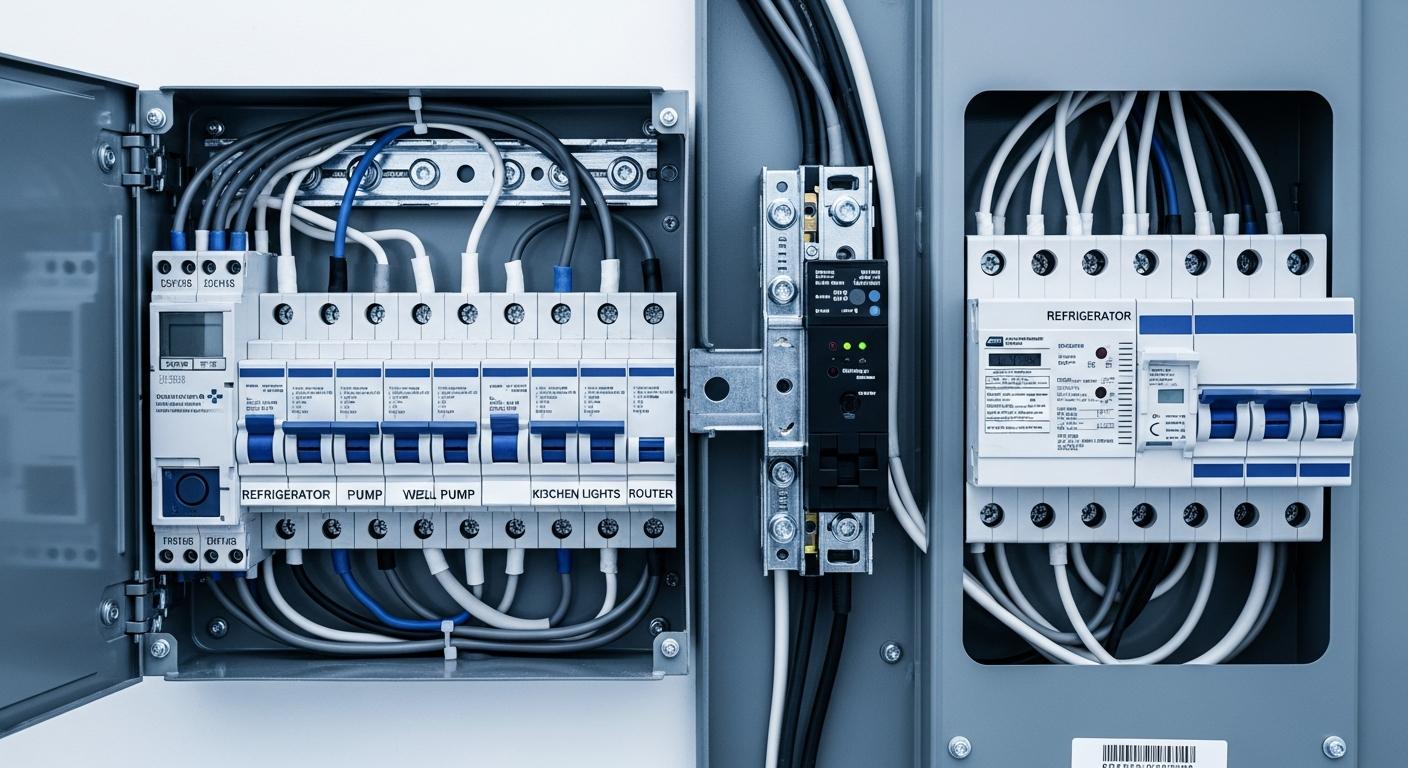
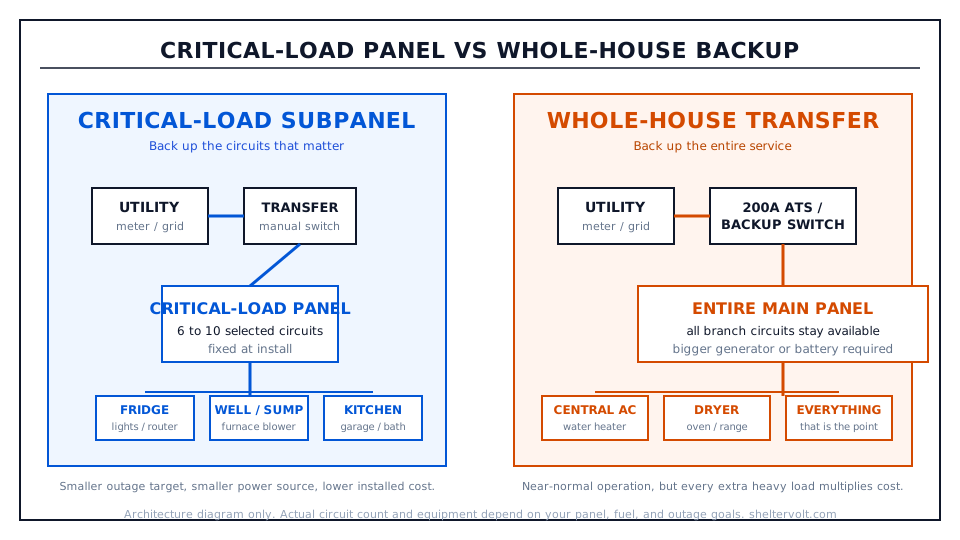
For most homeowners, a critical load panel is the smarter buy. It keeps the circuits that actually matter alive during an outage: refrigerator, freezer, sump pump or well pump, furnace blower, a few lights, internet, and maybe one kitchen circuit. Whole-house backup is the premium version. You buy it when you want the central AC, water heater, dryer, and the rest of the house to act normal while the grid is down.
That distinction matters because it changes both the transfer hardware and the size of the power source behind it. Before you price anything, run your real circuit list through the home generator sizing calculator. Then use this article to decide whether you should back up 10 circuits or the whole panel.
My bias is clear: most people should back up the smaller slice and keep the extra cash.
What a critical load panel actually changes
A critical load panel is a smaller subpanel that holds only the circuits you choose ahead of time. Your electrician moves those breakers out of the main panel and into a backup-fed panel. When the outage hits, only those circuits stay alive.
In a normal house, that list is not glamorous:
- refrigerator
- freezer
- sump pump or well pump
- furnace blower or boiler controls
- kitchen lights and hallway lights
- internet router and phone charging
- garage door opener
- one or two kitchen or bathroom receptacle circuits
That’s the point. You are not trying to preserve a normal Tuesday. You are trying to prevent flooded basements, frozen pipes, spoiled food, and a miserable night in the dark. Our guide to essential appliances to power during an outage goes circuit by circuit if you need help making that list.
What whole-house backup actually buys you
Whole-house backup means the backup system can support your entire home, not just a selected subpanel. Tesla says whole-home backup includes 120V loads like lights and receptacles plus 240V heavy loads like air conditioners, electric ranges, dryers, well pumps, and water heaters. Partial-home backup leaves some of those heavier loads out.
That sounds great until you remember what those heavy loads do to the math. A water heater can pull 4,500 watts by itself. A central AC compressor can demand several thousand running watts plus a nasty startup surge. Electric dryers and ovens are worse. If you need a refresher on why motor loads change everything, read starting watts vs running watts. Once those loads stay in scope, you stop shopping for a small backup plan and start shopping for a whole-house power plant.
Whole-house backup is not wrong. It is just expensive on purpose.
The switch is not the expensive part
Here’s the part most people miss: the transfer gear itself is not where the big jump happens.
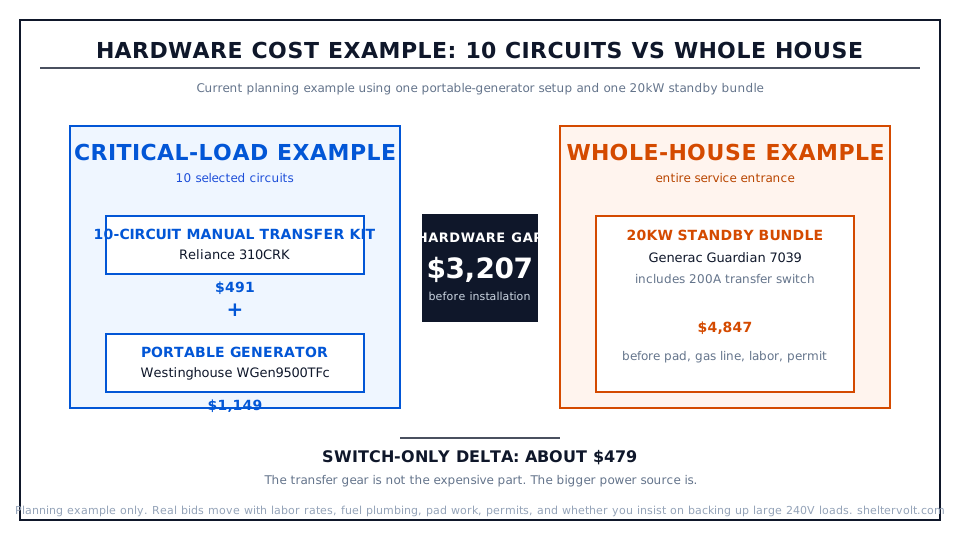
At current Home Depot pricing, a Reliance 10-circuit manual transfer switch kit comes in around $491, while a Generac 200-amp automatic transfer switch is around $970. That is a real difference, but it is only about $479. Painful, not catastrophic. If you want the broader primer on the hardware categories, the transfer switch for generator guide walks through interlocks, manual subpanels, and automatic switches in plain English.
The real money shows up when whole-house backup forces you into a much larger generator or battery system.
Use this apples-to-apples planning example:
- Critical-load setup: 10-circuit manual transfer switch kit at about $491 plus a Westinghouse WGen9500TFc portable generator at about $1,149. Hardware total: $1,640.
- Whole-house setup: Generac Guardian 20kW standby generator bundle with a 200A transfer switch at about $4,847. Hardware total: $4,847.
That is a hardware gap of about $3,207 before you pay for the concrete pad, gas plumbing, permit, electrician labor, startup, and inspection. The whole-house quote gets expensive because you are buying far more power capacity, not because the electrician swapped one metal box for another.
Battery backup follows the same rule
The battery version of this decision is the same story with nicer marketing.
Tesla’s Powerwall support docs separate partial-home backup from whole-home backup for the same reason generator installers do: the number of circuits and the size of the loads determine how many batteries you need. If you leave out the central AC, electric range, dryer, and water heater, one modest battery system can cover a disciplined outage plan. If you insist on backing up everything, the battery count climbs fast. That’s exactly why our what size battery to backup a house for 3 days math gets ugly so quickly.
There is one useful middle ground here. SPAN’s smart panel lets you keep more circuits physically available while changing priorities in software, and the company says that control can stretch battery runtime by up to 40% during an outage. That’s interesting. It is also not cheap. SPAN panels start at $2,550 before installation. So yes, smart load management can make whole-home-style battery backup more flexible. No, it does not magically make it inexpensive.
If you’re shopping batteries instead of generators, read best whole house battery backup systems next. The chemistry and inverter math still matter more than the app.
When critical loads win
Critical-load backup is the right answer when your goal is simple: keep the house safe and livable, not perfectly normal.
It wins when you have gas heat and only need the blower motor, not electric strip heat. It wins when your basement flood risk matters more than your dryer. It wins when your well pump, fridge, lights, and router are the real outage problem. And it definitely wins when you’re paying for this with your own money instead of trying to impress yourself with a “whole house” label.
It also wins on fuel and recharge. Smaller generator, less fuel burned. Smaller battery bank, faster recharge from solar or the grid. In real life, that matters more than bragging rights.
When whole-house backup is worth paying for
Pay for whole-house backup when you truly need whole-house behavior.
- You have a medically sensitive home where interruptions are unacceptable.
- You are protecting a rural or vacation property that may sit empty during storms.
- You have critical 240V loads that must come back automatically, not eventually.
- You are deliberately buying seamless convenience and you know it is a premium product.
What usually does not justify whole-house backup is vague anxiety after a few outages. That’s how people end up with a $15,000 project when a $4,000 problem would have solved the real issue.
The question to bring to every quote
Do not ask, “How much for whole-house backup?” Ask, “What is the cheapest code-compliant setup that keeps my critical circuits on during an outage?”
That phrasing forces the conversation back to math instead of fear. It also tells you quickly whether the installer is solving your problem or upselling a bigger one.
Once you’ve decided which circuits deserve backup, the next move is choosing the connection method. Read interlock kit vs transfer switch if you’re still deciding between whole-panel flexibility and a dedicated critical-load subpanel. Then go back to the home generator sizing calculator and total the loads that actually matter.