Lumin smart panel vs SPAN
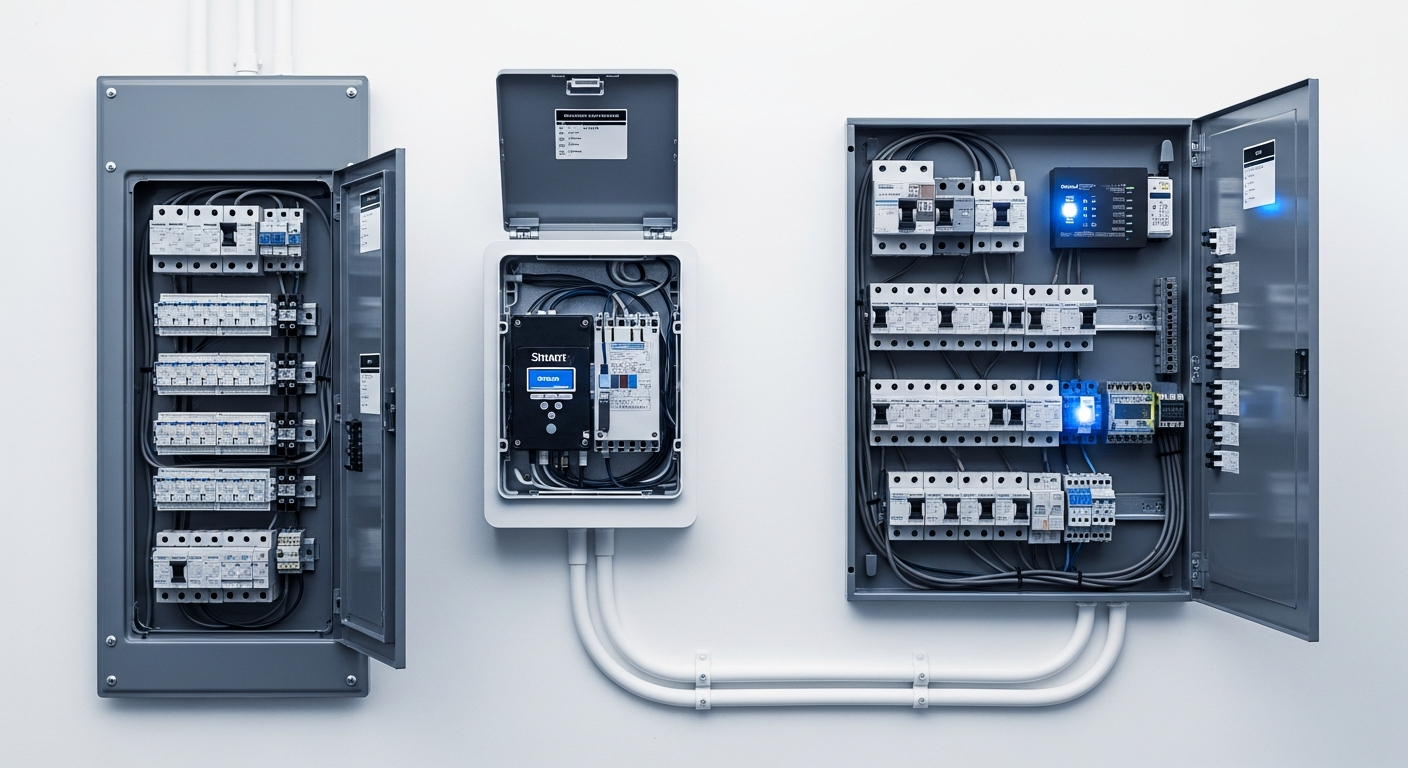
Lumin is usually the smarter buy if your existing panel is healthy and you only need smart control on the loads that actually cause trouble, like EV charging, a heat pump, a water heater, or central AC. SPAN makes more sense when you already need a panel replacement or you want one smart panel that can watch and control far more of the house.
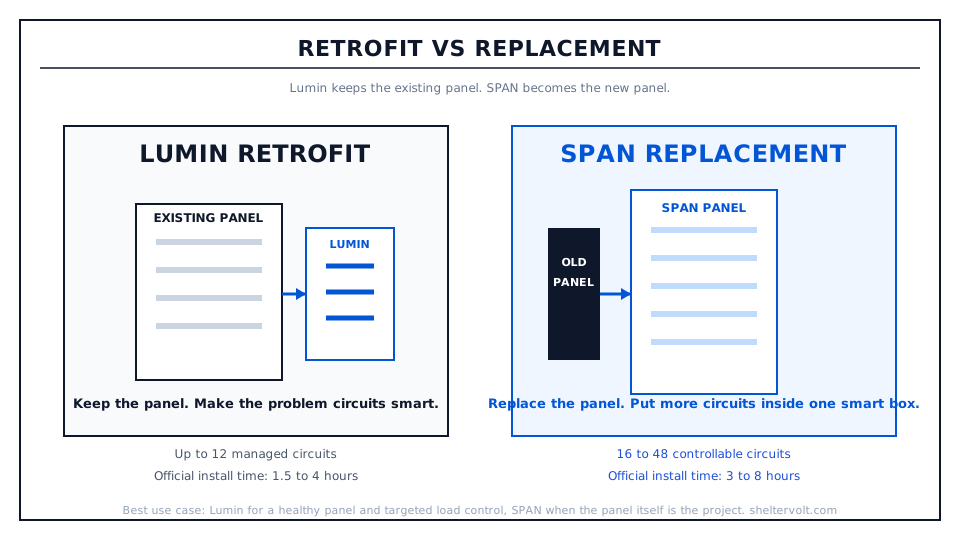
No, you do not have to replace your whole breaker box for Lumin. That is the first thing to understand. Lumin bolts on beside the existing panel and manages selected circuits. SPAN is the new panel.
If you need the bigger safety context first, start with the transfer switch for generator guide. If you are already deep into SPAN pricing, read how much a SPAN electrical panel costs next. This article is the head-to-head between the retrofit option and the full replacement option.
They solve different installation problems
The official Lumin Smart Panel tech sheet says it connects to the existing service panel, manages up to 12 circuits, and typically installs in 1.5 to 4 hours. The current SPAN Panel page says SPAN comes in 16- to 48-circuit versions, and SPAN’s support docs say installation is usually 3 to 8 hours and similar to a standard panel swap.
| What matters | Lumin Smart Panel | SPAN Panel |
|---|---|---|
| Install style | Retrofit add-on beside the existing panel | Full panel replacement |
| Smart-control scope | Up to 12 managed circuits | 16 to 48 controllable circuits depending on panel |
| Official typical install time | 1.5 to 4 hours | 3 to 8 hours |
| Warranty | 10-year limited | 10-year |
| Connectivity | Wi-Fi or Ethernet, with local-network live data and controls | Internet required for app and monitoring; local on-premise access exists today for MAIN 32 |
| Best fit | Good existing panel, targeted load management | Panel swap, broader circuit coverage, one-box experience |
That table is the whole argument in miniature. Lumin is a surgical add-on. SPAN is a new electrical front door.
Lumin wins when the old panel is still good
Lumin makes the most sense when the panel itself is not the problem. The tech sheet says it supports six 60-amp lines and six 30-amp lines at normal temperature, works with any brand of electrical panel and breaker, and supports multiple Lumin units if you need more controlled circuits. In plain English, that means you can leave the existing load center in place and make the problem loads smart.
That is a very different job from tearing out the breaker box. If your electrician is pointing at a handful of hungry circuits and saying, “These are the ones causing the mess,” Lumin is pointed at exactly that kind of project. EV charger. Pool pump. Heat pump. Resistance strip heat. Water heater. Big stuff. Lumin’s own homeowner guidance says users get the most advantage when controlling those large loads, and that it is not necessary to control every circuit in the house.
Lumin also has the cleaner answer if cloud dependence makes you twitchy. Its current app page explicitly advertises local control when internet is down, and the latest tech sheet lists local-network live data and controls. That is a real advantage for homeowners who do not love the idea of their electrical gear turning into a cloud-only appliance.
The fine print is worth reading, though. Lumin markets the platform as compatible with any battery, inverter, or service panel, but the deeper state-of-charge automations are officially limited to Tesla, SolarEdge, Enphase, EG4, and FranklinWH batteries. So yes, the platform is flexible. No, the fanciest battery-aware behavior is not universal.
SPAN wins when you want the panel itself to be smart
SPAN’s pitch is cleaner because the intelligence lives inside the panel. The current product page says SPAN is available in multiple sizes with 16 to 48 controllable circuits, and SPAN’s own pricing page lists current MSRPs from $2,550 to $4,100 before installation, with the common MAIN 32 at $3,500. That is the hardware side. The labor side is the bigger distinction: SPAN says the install usually runs 3 to 8 hours and is similar to a normal panel swap.
That full-replacement architecture buys you broader visibility and fewer blind spots. With a compatible battery, SPAN lets you assign circuits to outage buckets like “stays on,” “stays on until 50% battery,” and “turns off in an outage.” If most of the loads you care about live inside that one panel, it is a very clean experience.
But the fine print matters here too. SPAN’s outage docs say backup priorities do not apply to loads outside SPAN, like circuits in a downstream sub-panel. If you parallel two SPAN panels and the battery lands on only one, the other panel can lose part of the backup magic. And if the house is generator-only with no compatible battery, SPAN says automatic load shedding and circuit prioritization are unavailable. In that setup, you are doing more manual management than the marketing screenshots imply.
Internet dependence is less of a knock than it used to be, but it is still not nothing. SPAN’s main product page says an internet connection is required for app control and monitoring. The company improved the story in February 2026 with SPAN Home On-Premise, a local-only control path that can manage circuits and backup priorities during a connection problem. Good move. The catch is that this is currently a MAIN 32 feature, not a universal answer across the whole lineup.
Which handles load shedding better?
SPAN handles load shedding better when you want the broadest scope. Lumin handles it better when your real problem lives on a dozen circuits or fewer.
Lumin’s Off-Grid Manager can shed controlled circuits when the grid drops, when whole-home demand crosses a power limit, or when battery state of charge falls. That makes it excellent for targeted nuisance loads. If your actual outage headaches are the AC condenser, well pump, resistance heat, EV charger, or water heater, Lumin can solve a real problem without turning the whole electrical system into a replacement job.
SPAN’s advantage is coverage. More of the house can live inside the smart environment, so the app has fewer blind spots and the outage-priority model is easier to explain to normal people. Refrigerator stays on. Dryer goes dark. Simple. The catch is that the “whole-home” feel starts slipping if your critical loads are split across sub-panels or if your backup system is generator-only.
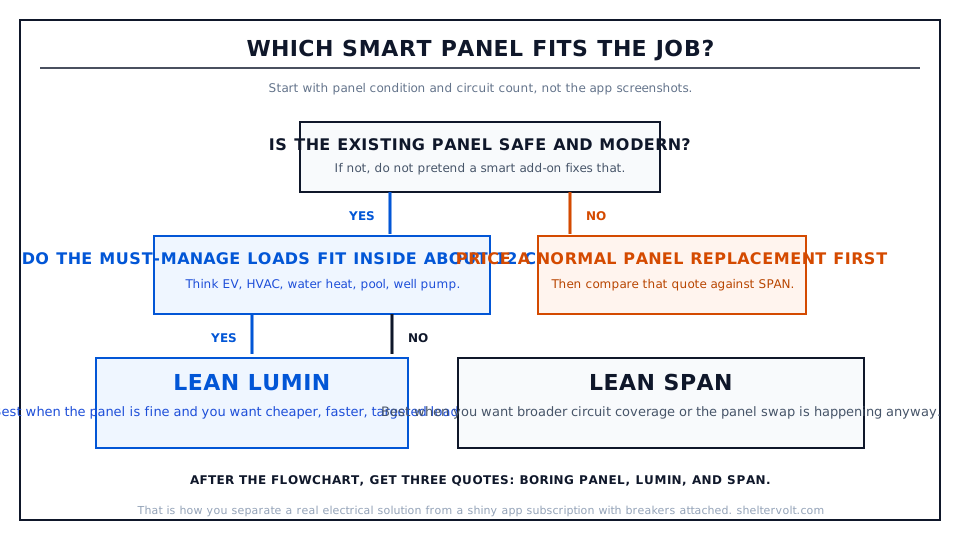
My blunt take: if your electrician can point to 6 to 10 circuits that need smarter management, Lumin is usually the higher-value fix. If the whole electrical layout is being reconsidered anyway and you want one smart panel at the center of the job, SPAN is the better long-term platform.
Which is cheaper to install?
On a straightforward retrofit, Lumin usually wins. Public pricing is still fuzzier than it should be, but SolarReviews currently pegs Lumin hardware around $2,100 to $2,900 before installation and estimates another $1,000 to $1,500 for labor on a typical job. As of April 20, 2026, SPAN’s own support page lists panel MSRPs from $2,550 to $4,100 before installation, and the common MAIN 32 starts at $3,500 before a single breaker gets moved.
That gap exists for a reason. With Lumin, the electrician keeps the existing panel and only reroutes the circuits you want smart. With SPAN, they are migrating breakers, replacing the box, commissioning a new panel, and sometimes forcing decisions about sub-panels, battery landing point, or breaker compatibility. Even SPAN’s own support language basically places it in the labor category of a panel swap.
But do not stop at sticker price. SPAN can still pencil if you were already paying for a panel replacement, needed more than 12 smart circuits, or were about to build a separate critical-load setup around a battery project. In those cases, some of the “SPAN premium” was coming anyway. That is why the smarter next read after this one is often critical load panel vs whole house backup.
And here is the safety reality people try to skip: if your current panel is overcrowded, damaged, or one of the brands electricians already hate, Lumin does not magically turn that into good infrastructure. You still have a panel problem. In that case, price a normal panel swap and a SPAN install side by side, then compare the premium honestly.
My bottom line
Buy Lumin if your existing panel is modern, code-sound, and your pain is concentrated in a handful of heavy loads. It is the cleaner answer when you want smart control without turning the whole breaker box into the project.
Buy SPAN if your panel already needs replacement, you want broader circuit coverage in one interface, and you are pairing it with a compatible battery where the outage-priority features can do real work. That is when the premium starts to feel justified instead of decorative.
Before you sign anything, ask for three line-item quotes: a normal panel replacement, a Lumin retrofit, and a SPAN installation. If the SPAN quote is the expensive one, compare it against the current SPAN electrical panel cost breakdown before you treat the premium as automatic. Then run your must-have outage circuits through the home generator sizing calculator. That one sheet of numbers will tell you whether you need smarter control, a safer panel, or both.