GenerLink cost and installation
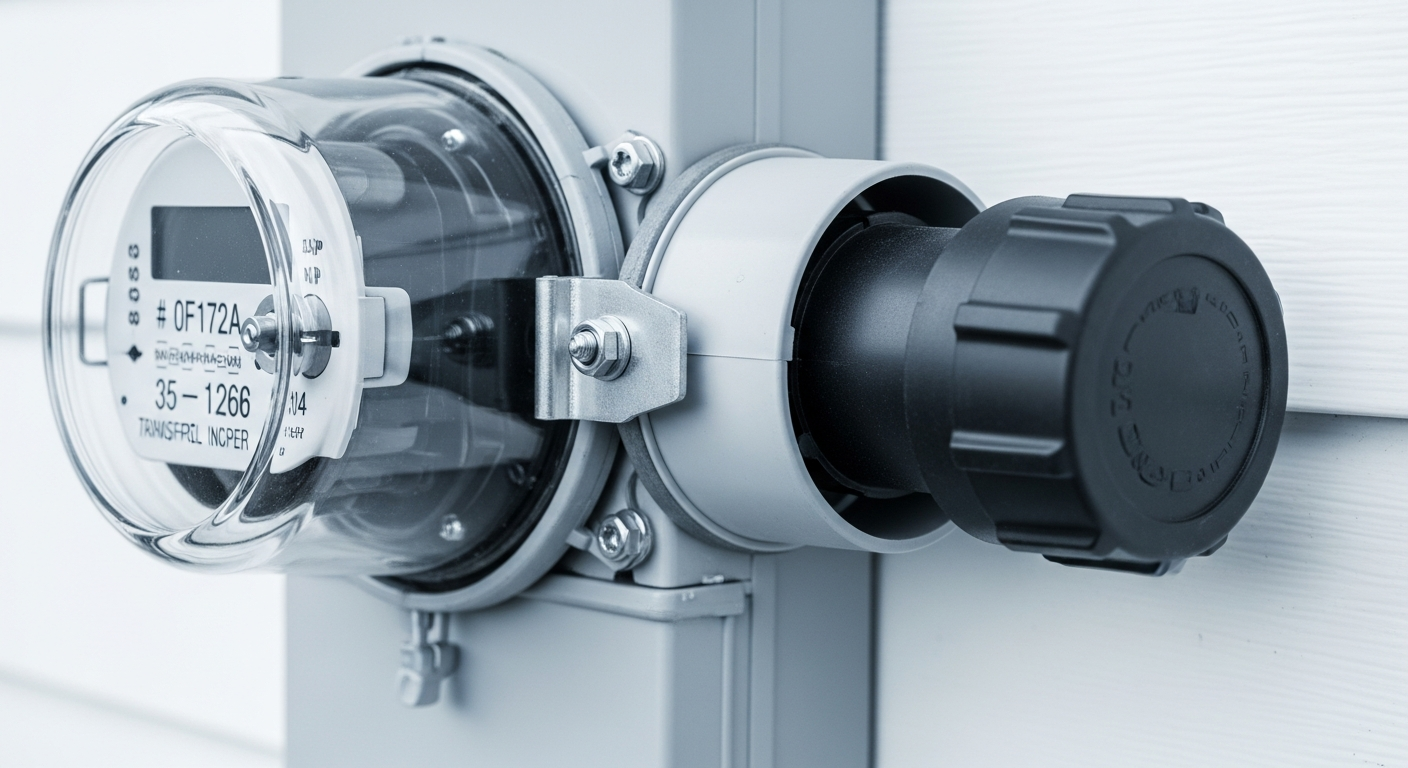
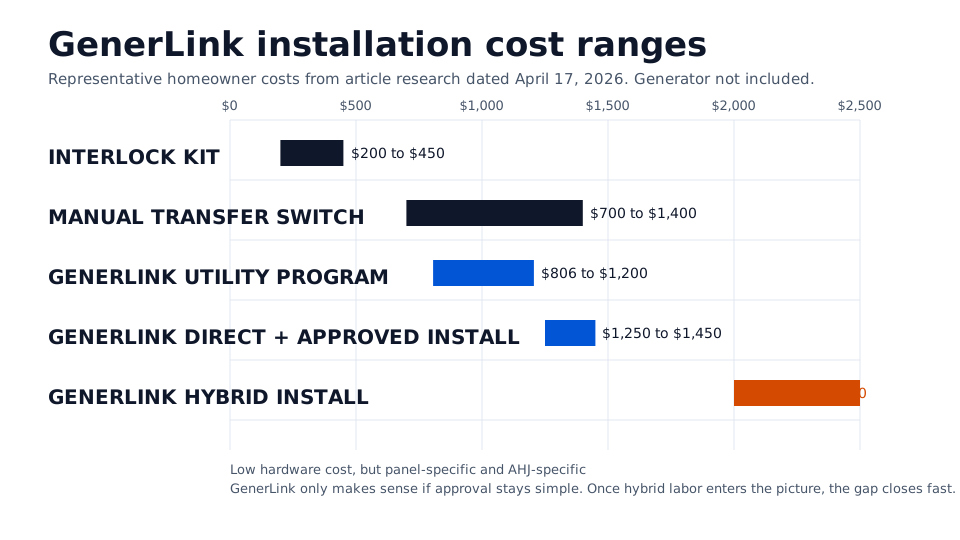
GenerLink usually costs about $1,000 for the hardware. In a utility-approved setup, the full job often lands around $1,250 to $1,450 if you buy direct, or roughly $800 to $1,200 if your co-op or utility already has a program. If your utility will not allow the device behind the meter, the official hybrid install path can push the real project cost closer to $2,000 to $2,500.
That is why the real GenerLink question is not “what does it cost?” It is “will my utility allow it, and is that still cheaper than a transfer switch in my house?” If you need the broader hardware picture first, read the full transfer switch for generator guide. If you are deciding between cheaper portable-generator options, also read interlock kit vs transfer switch.
What GenerLink actually is
GenerLink is a UL-listed, socket-mounted transfer switch that installs behind the electric meter instead of next to your breaker panel. On the current GenerLink product page and the manufacturer’s main spec page, the pitch is consistent: no subpanel, no interior rewiring, and full access to your existing breaker panel during an outage.
That last part is what makes homeowners interested. A normal manual transfer switch forces you to pre-select a handful of critical circuits. GenerLink does not. Once the generator is connected, you use your existing breaker panel to decide what stays on and what stays off.
But do not confuse “full panel access” with “whole-house power.” GenerLink does not make your generator bigger. The manufacturer rates the common residential units for 7.2 kW or 9.6 kW continuous output depending on model, and its own generator-selection guide says most compatible setups land between about 4,400 and 9,600 running watts. That is enough for a well-planned outage setup. It is not enough to pretend the utility never went down.
Compatibility checklist before you chase a quote
The official FAQ and operations manual narrow the field pretty fast. GenerLink is a good fit only if all of these are true:
- Your service is 200 amps or less
- Your meter socket is Form 2S
- You are connecting a 120/240V portable generator, not a standby generator
- Your generator is actually compatible with the plug, wattage, voltage, and GFCI requirements
- Your utility approves the normal behind-the-meter install, or you are willing to pay for the hybrid meter-adjacent workaround
The service-size limit matters more than people expect. The FAQ is direct: 320-amp and 400-amp services are out. Multi-unit buildings are usually out too. So are homes where the generator itself is the wrong match. Global Power Products says not every generator works with GenerLink because of plug type, wattage, voltage, or GFCI protection.
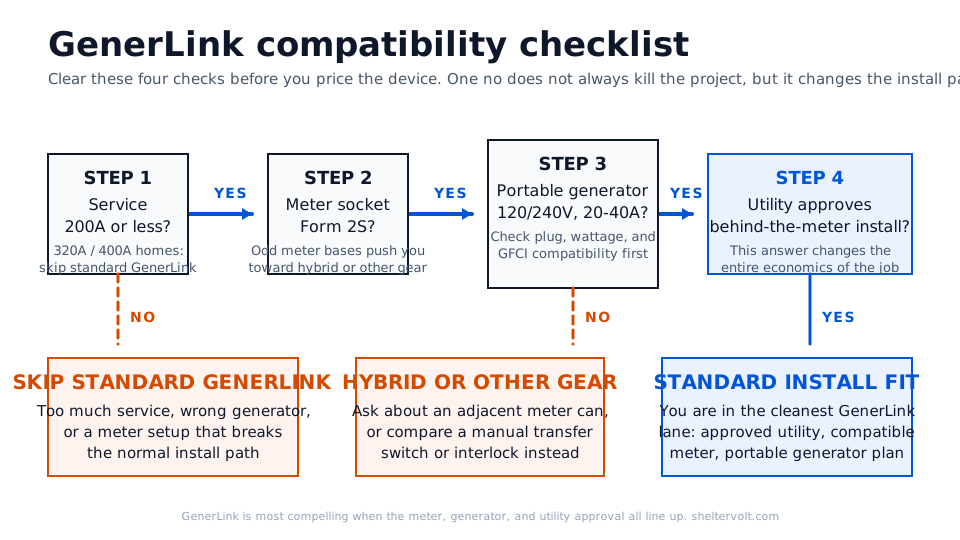
The homeowner language around this product is always the same: “Will my utility allow it?” and “Will my generator actually work with it?” In my view, those are the right questions. The device itself is not the risky part. Buying it before you clear those two points is.
How much GenerLink costs in April 2026
This is where the numbers get more interesting than the marketing.
On April 17, 2026, the direct-purchase GenerLink product listing showed the device at $999 with a 20-foot GenerLok cable included. The same page says a normal utility-approved installation typically costs another $250 to $450. That puts the standard direct-buy path at roughly $1,250 to $1,450 before tax.
Utility and co-op programs can be cheaper or at least simpler:
| Source | Pricing I found on April 17, 2026 | What it includes |
|---|---|---|
| First Electric | $806.25 for MA23N or $967.50 for MA24N | Installation and 20-foot cord |
| GRU | $1,034.25 plus tax | Installation and power cord |
| SECO Energy | $1,200 plus tax | Installation |
That is the best-case GenerLink story. Your utility already knows the product, already allows it, and either installs it directly or has a clean process for getting it done.
The more expensive path is the one most homeowners miss. If your utility will not approve a standard behind-the-meter install, the official GenerLink Hybrid Solution still uses a $999 device, but the site says the new adjacent meter-can installation usually adds $1,000 to $1,500 in electrician labor. Now you are at roughly $2,000 to $2,500 before tax, and the value proposition changes a lot.
The installation itself is usually quick once everybody agrees on the plan. Global Power Products says standard installs take about 30 to 90 minutes, and the direct-purchase page says many approved installs take about 30 minutes. The catch is coordination. Because this hardware sits at the meter, the scheduling and approval process can take longer than the physical install.
Why utility approval is the whole game
GenerLink lives in the part of the house where homeowners have the least control: the meter and the utility interface. That is why it can be wonderfully clean when approved and frustrating when it is not.
If your utility already offers GenerLink, great. That usually means the approval fight is over, the installer path is defined, and pricing is predictable. GRU, First Electric, and SECO all publish normal customer-facing GenerLink programs right now.
If your utility does not allow it behind the meter, you still may not be dead in the water. The manufacturer says the device can be installed in a secondary meter box after the existing utility meter, and the current hybrid product page turns that into a formal meter-adjacent package. The problem is simple: once you need an extra meter can and more electrician work, you lose much of the clean-install advantage that made GenerLink appealing in the first place.
That is why I would never buy one on hope. I would buy one only after getting a clear answer on the approval path.
GenerLink vs transfer switch
If your utility approves GenerLink and your house meets the meter and service requirements, it can be a very smart portable-generator setup. You keep your existing panel. You do not have to move circuits into a subpanel. And during an outage you can decide on the fly whether the well pump, fridge, freezer, furnace, or a window AC gets the available power.
That flexibility is real. It is the strongest case for GenerLink.
But there are four situations where a conventional transfer switch is the better buy:
- Your utility will not approve a standard behind-the-meter install, and the hybrid price pushes the project into manual-transfer-switch territory
- You have 320-amp or 400-amp service, or some other meter/base condition that knocks you out of the normal compatibility box
- You want a permanently installed standby generator with automatic switching
- You prefer a pre-labeled critical-load setup that anybody in the house can operate without thinking
A manual transfer switch is less elegant, but it is predictable. An interlock kit is even cheaper when your panel and AHJ allow it. And if you are building around a standby generator, GenerLink is not the product category you want anyway.
My blunt take: GenerLink is best when it saves you from interior panel work without creating a utility headache. If the utility already sells it or clearly approves it, I like it. If you have to force the project through a hybrid workaround, I stop getting excited.
My take on who should buy it
Buy GenerLink if all of this sounds like you:
- Single-family house with 200-amp-or-less service
- Portable generator plan, not standby-generator plan
- Utility-approved installation path already confirmed
- You want whole-panel flexibility without moving circuits into a separate transfer subpanel
Skip it and price a transfer switch instead if any of this sounds like you:
- Your utility is vague, slow, or noncommittal about approval
- Your home has larger service, odd meter conditions, or a multi-unit setup
- You want the cheapest acceptable solution
- You want fully automatic backup while you are away
Before you buy anything, send your electrician three things: a photo of the meter, your service size, and your generator model number. Then run the real load numbers through the home generator sizing calculator and brush up on starting watts vs running watts. That will tell you whether GenerLink is actually solving your problem or just giving you a fancier way to avoid doing the math.