SPAN electrical panel cost: $2,550 MSRP, installed-price guide (2026)
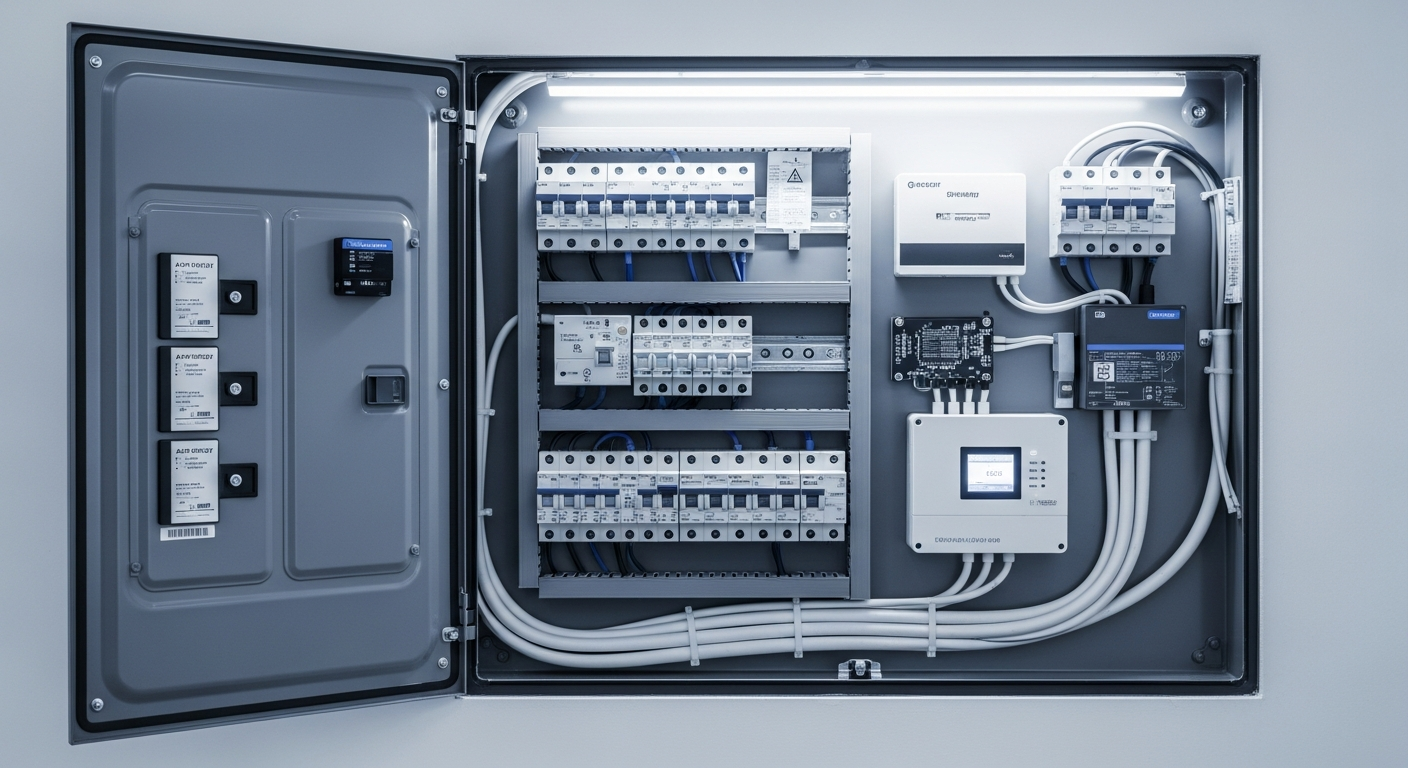
A SPAN electrical panel starts at $2,550 MSRP before installation, shipping, and applicable taxes. The MAIN 32 is $3,500 MSRP. Your installed price is a separate, house-specific electrician quote: permits, existing-wiring cleanup, breakers, service equipment, battery work, and EV work can all change the scope. SPAN’s current pricing and installation guidance is the source for those hardware prices.
The short version: buy SPAN when circuit-level control solves a real project problem, such as managing a home battery or adding large electric loads. If you just need a safe, code-compliant panel replacement, get a conventional-panel quote alongside the SPAN quote. Do not compare a $3,500 piece of hardware to an all-in panel-replacement price and call that a fair comparison.
Before you price either option, run your actual circuits through the home generator sizing calculator. That list is more useful to an electrician than a vague goal like “whole-home backup.”
SPAN hardware MSRP vs. your installed project cost
Checked August 11, 2026, SPAN lists these MSRPs. They exclude installation, shipping, and applicable state and local taxes.
| SPAN model | Published MSRP | What it tells you |
|---|---|---|
| MLO 24 | $2,550 | The published starting price |
| MAIN 16 | $2,950 | A smaller main-panel option |
| MAIN 32 | $3,500 | The model many homeowners compare |
| MLO 48 | $3,850 | More circuit capacity without a main breaker |
| MAIN 40 | $4,100 | The highest listed panel MSRP |
SPAN says its panels must be installed by a SPAN-authorized, licensed electrician. It says most installations take 3 to 8 hours and are similar to a standard panel swap. Treat that as a timing reference, not a promise of a universal installed price.
Here is the cost distinction that matters:
| Cost line | What you can verify now | What your installer must price |
|---|---|---|
| SPAN hardware | $2,550 to $4,100 MSRP | The model and circuit capacity your project needs |
| Conventional panel replacement | The Spruce reports a $2,100 to $2,900 typical consumer benchmark | Local labor, permits, breakers, code updates, and service size |
| SPAN installation | SPAN’s authorized-install requirement and 3-to-8-hour typical timing | Labor, commissioning, permit, wiring changes, and equipment changes |
| Service-upgrade avoidance | Possible only if the project team confirms load management is acceptable | Existing service, utility rules, meter/main work, trenching, and appliance loads |
The Spruce figure is a consumer benchmark, not a SPAN quote. It may not match your panel location, jurisdiction, or service. A basic panel replacement and a smart-panel project are different scopes even when both involve replacing the same old box.
What to ask for in a SPAN quote
Ask every bidder to split the proposal into four lines: panel hardware, labor, permits, and other electrical work. Then ask what those “other” items actually are. Service upgrades, a meter-main replacement, a subpanel, battery integration, or EV charging work should not hide inside one big installed-price number.
Also confirm the electrician is authorized by SPAN before you accept a quote as a SPAN installation quote. SPAN says an electrician who is not yet authorized can enroll and complete product training, but that is something to resolve before the project starts, not after you have bought a panel.
This is not a DIY decision. A licensed electrician should determine the panel configuration, required permits, and whether load-management assumptions are acceptable under your local rules.
Where SPAN can earn its premium
SPAN is a full panel replacement with circuit-level monitoring and control. Its practical value is not that the panel has an app. It is that you can make a deliberate plan for which loads stay on and which loads can wait.
That matters most for a battery-backed home. Refrigerator, freezer, internet, lighting, a sump pump, or a well pump may be priorities. An EV charger, dryer, water heater, and other comfort loads usually are not. SPAN says the panel can let homeowners change what receives power during an outage, and it markets up to 40% more battery life from that control. Treat that as a manufacturer claim, not a savings guarantee: your actual runtime still depends on battery capacity and the loads you leave on.
The same logic can matter when an EV charger, heat pump, or induction range is pushing an older home’s electrical service toward an upgrade. SPAN describes its panel as an energy-management system that can pause selected loads when the service limit is reached. Whether that avoids an upgrade in your house is a design and permitting question for the electrician and local authority, not a promise a marketing page can make.
If your outage plan only needs a handful of circuits, compare SPAN with a critical-load panel. A simpler critical-load setup can be the cheaper, clearer answer.
When a normal panel replacement is the better buy
SPAN is harder to justify when your 200-amp service is adequate, your existing panel only needs replacement, and you do not plan to add a battery, EV charger, heat pump, or other major load. In that situation, the smart features are convenience and future optionality. They may be worth paying for, but they are not automatically cheaper than a conventional panel.
Get both scopes in writing. The conventional quote should describe the panel, breakers, permits, and any code corrections. The SPAN quote should do the same, plus the model, commissioning, and authorization. That comparison will show whether you are paying for a useful control layer or just a more expensive version of a job you already needed.
If your existing panel is healthy and you only need smarter control on selected circuits, read Lumin smart panel vs SPAN before assuming a full panel replacement is the only smart-panel path.
SPAN with a generator: the important limitation
SPAN is not a universal generator transfer switch. SPAN says a standby generator must be upstream of the panel and managed through listed automatic or manual transfer equipment. It also says the app’s automatic outage load shedding, time-remaining estimates, and backup priorities are for compatible battery-storage systems, not a generator-only setup.
Never land a standby generator directly in a SPAN panel. SPAN’s generator guidance requires the generator upstream of the panel and calls for transfer equipment listed for that generator. Read the transfer switch guide, then have a licensed electrician design the connection for your generator, equipment manuals, and local code.
FAQ
How much is a SPAN electrical panel before installation?
SPAN’s published MSRP starts at $2,550 for the MLO 24. The MAIN 32 is $3,500; the listed panel range tops out at $4,100 for the MAIN 40. Those prices exclude installation, shipping, and applicable taxes.
How much should I budget for a SPAN panel installed?
Start with the $2,550 to $4,100 hardware MSRP, then request a written installed price from a SPAN-authorized licensed electrician. Ask the quote to separate labor, permits, breakers or wiring changes, commissioning, shipping, taxes, and any service, battery, or EV work. There is no responsible universal installed price because those site conditions change the scope.
Does SPAN replace a transfer switch?
No. SPAN is a smart electrical panel. A standby generator still needs proper upstream transfer equipment, and SPAN does not provide the same automated outage features with generator-only backup that it provides with compatible battery storage.
Can SPAN save money on a battery system?
It can only save money if circuit control changes the system design. If your load plan lets you back up essential circuits instead of every large appliance, you may need less battery capacity or avoid a separate critical-load setup. Have the installer model the loads and show the design difference before treating that as a savings claim.
Do I need more than one SPAN panel?
Possibly. SPAN says a second panel may be needed for homes with more circuits than one panel supports or service larger than 200 amps. Its authorized installer should determine the configuration and explain how any additional panel affects the quote.
My take
SPAN is a smart way to spend money when it prevents a bigger, uglier expense or makes a battery backup plan genuinely more useful. It is a bad way to spend money when it is only replacing a perfectly ordinary panel with a fancier one.
Make one list before you ask for quotes: the circuits that are must-have, nice-to-have, and off during an outage. That list will tell you whether you need SPAN, a critical-load panel, or simply a normal panel and a better backup plan. Then take that list, plus the output from the home generator sizing calculator, to a licensed electrician.