Can a solar generator run a refrigerator?
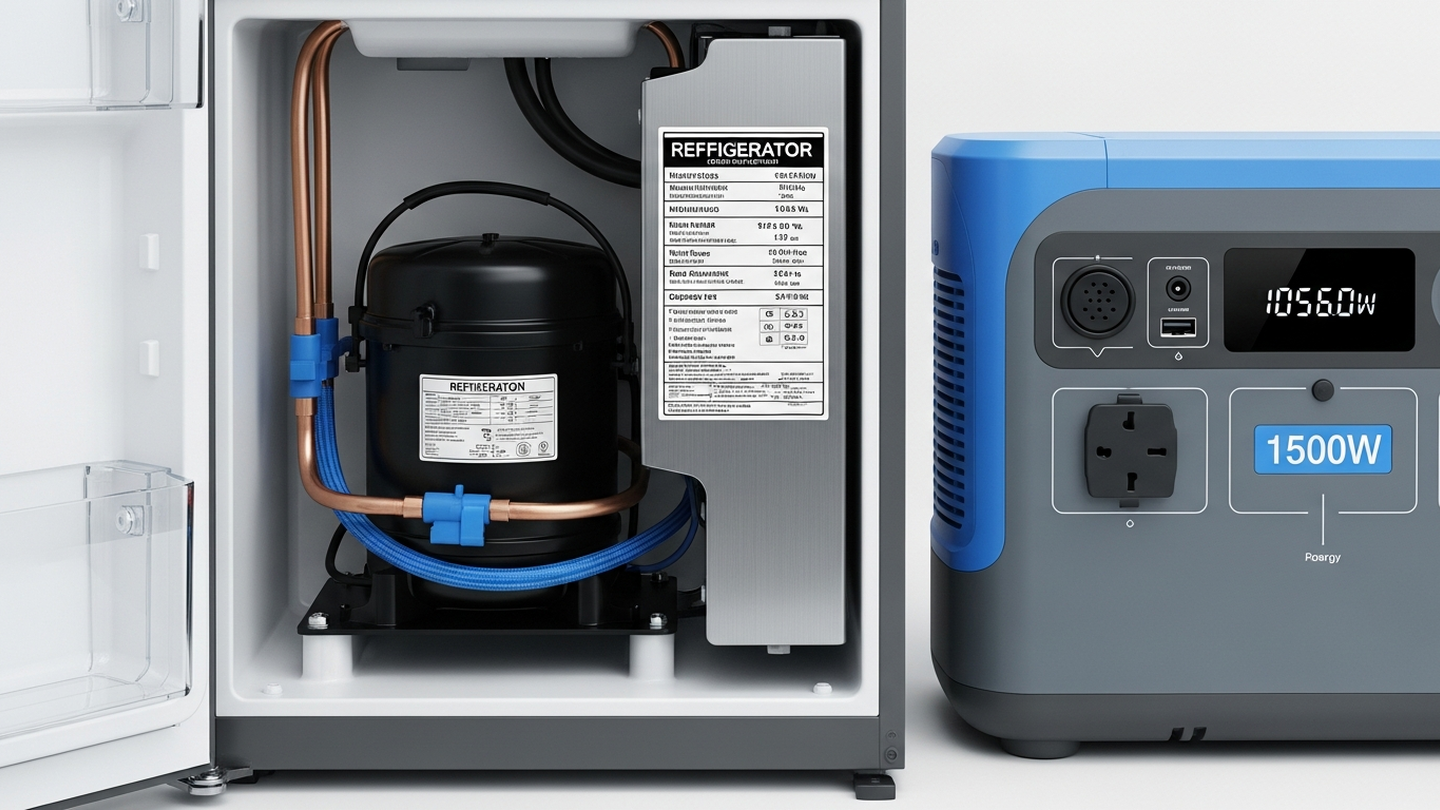
Yes, a solar generator can run a refrigerator. A fridge is actually one of the easier outage loads because it is usually a 120V appliance, not a 240V load like a well pump or central AC. The catches are compressor startup and battery size, not some mysterious compatibility problem.
If you are still deciding whether a portable battery setup makes sense for your house at all, start with our solar generator for home backup guide. This article is the narrower question: will a power station keep your specific refrigerator cold, for how long, and what size unit stops being a gamble?
Why a refrigerator is usually a yes
Most full-size US refrigerators are standard 120V appliances. Samsung lists its 26.7 cu. ft. side-by-side at 115V / 60Hz / 5.0A, which is normal for the category. That is a huge difference from backup loads that truly need 120/240V split-phase output.
The other reason refrigerators are friendlier than people expect is that they cycle. The compressor runs, the thermostat is satisfied, and the load drops back down. A fridge is not a space heater pulling full wattage every second of the outage.
That does not mean any battery box will do. Refrigerators still use compressor motors, and motors hit harder at startup than they do once they are running. If you need the full explanation, read starting watts vs running watts. The short version is simple: buy enough inverter to survive the compressor kick, then buy enough battery for the outage length you care about.
The three specs that matter
1. Inverter output
Ignore the giant battery sticker for a minute and look at AC output. A tiny 300W camping unit is the wrong tool for most kitchen refrigerators. Jackery’s Explorer 300 Plus manual lists 300W rated output and 600W surge. That is fine for phones, lights, and maybe a dorm fridge. It is thin ice for a full-size kitchen refrigerator.
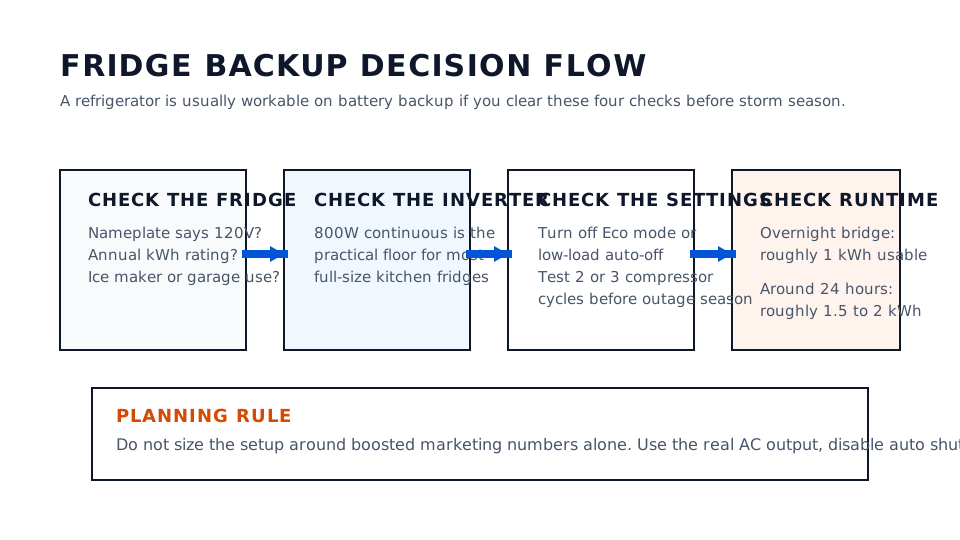
An 800W to 1,000W pure-sine-wave inverter is where this stops feeling sketchy for many modern fridges. EcoFlow’s RIVER 2 Pro manual lists 800W total AC output and 1,600W peak. That is a much more realistic floor.
If you want margin instead of crossed fingers, move into the 1,500W to 2,400W class. EcoFlow’s DELTA 2 Max is rated for 2,400W AC output, 4,800W surge, and 2,048Wh of battery capacity. That is overkill for the fridge alone, but it gives you room for the refrigerator plus a router, a few lights, and phone charging.
One warning here. Do not size to X-Boost style marketing numbers. EcoFlow’s own DELTA 2 Max manual says X-Boost is not suitable for every appliance and is “more suitable for heating devices.” A refrigerator compressor is not a toaster. Plan around the real rated AC output.
2. Daily energy use
This is the runtime side of the problem. An efficient refrigerator can be surprisingly modest. One current ENERGY STAR 18.0 cu. ft. top-freezer model is rated at 362 kWh per year, or just under 1.0 kWh per day. A current ENERGY STAR 18.7 cu. ft. bottom-freezer model is rated at 466 kWh per year, about 1.28 kWh per day. At the big end, LG lists its 29 cu. ft. French-door model at 657 kWh per year, and Samsung’s 26.7 cu. ft. side-by-side comes in at 691 kWh per year.
That range matters more than the vague phrase “full-size fridge.” A lean top-freezer and a giant family-hub side-by-side do not ask the same thing from your battery.
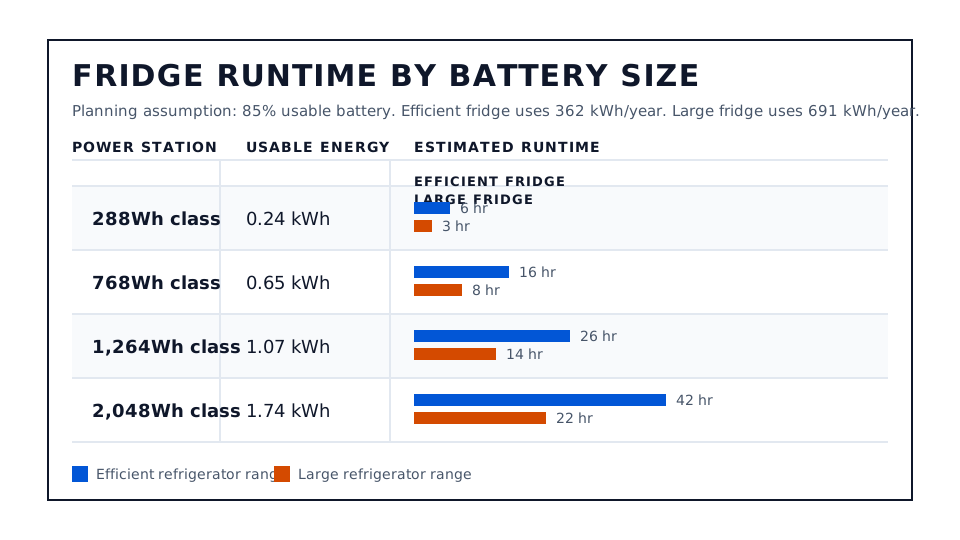
Here is the rough math I use for planning: take the battery’s advertised watt-hours, assume about 85% usable after inverter losses, then divide by your fridge’s daily kWh use.
| Power station | Usable energy for planning | Efficient fridge (362 kWh/yr) | Larger fridge (691 kWh/yr) |
|---|---|---|---|
| 288Wh class | 0.24 kWh | about 6 hours | about 3 hours |
| 768Wh class | 0.65 kWh | about 16 hours | about 8 hours |
| 1,264Wh class | 1.07 kWh | about 26 hours | about 14 hours |
| 2,048Wh class | 1.74 kWh | about 42 hours | about 22 hours |
That lines up pretty well with EcoFlow’s own claim that the DELTA 2 Max can run a refrigerator for 14 hours based on a 120W fridge test. Real life can be better or worse depending on room temperature, how often the door opens, and whether the unit is already cold when the outage starts.
3. Idle behavior and auto shutoff
This is the sneaky failure point.
A refrigerator does not pull power constantly. It cycles. Some power stations hate that. If the load drops low enough between compressor cycles, the station’s energy-saving mode can decide nothing important is connected and shut the AC output off.
EcoFlow clearly knows this is a real issue because its DELTA 2 Max page calls out “AC Always-On” specifically for keeping your fridge protected during switchover and backup use. Translation: if your power station has an Eco mode, standby timer, or low-load auto-off setting, disable it before you trust it with food.
What size solar generator makes sense?
Here is the practical version.
Mini fridge or beverage fridge: a small 300W to 500W unit can work. This is the minority case.
Modern full-size kitchen refrigerator: treat 800W continuous output as the practical floor and 700Wh to 1,000Wh of battery as a short-outage bridge, not an all-day solution.
Large French-door, side-by-side, or garage fridge in summer: start around 1,000W to 1,500W continuous output and 1 kWh to 2 kWh of battery if you want margin. Bigger is better here because hot garages and frequent door openings make the compressor work harder.
Fridge plus a few essentials: this is where 2 kWh class units earn their keep. Once you add internet, lighting, and device charging, you are shopping for a small outage system, not just “something for the fridge.”
The mistakes that make people think it “didn’t work”
The first mistake is buying by battery capacity only. A 288Wh unit may technically power the fridge for a little while, but that is not the same as having a good refrigerator backup plan.
The second is trusting a lab-perfect runtime claim. Those numbers are usually based on a stable test load. Real refrigerators cycle, defrost, and run harder in a warm kitchen. That is why I like using the annual kWh rating as a planning number. It is not perfect, but it is honest.
The third is never testing the setup before storm season. Plug the refrigerator into the power station on a normal day. Let it sit long enough for the compressor to cycle on and off a few times. Make sure the station does not shut itself down between cycles. If it does, the problem is better settings or a different power station, not wishful thinking.
The last mistake is trying to solve a short outage with too much gear. If the power is only going to be out for an hour or two, you may not need to run the refrigerator continuously at all. USDA says an unopened refrigerator keeps food at a safe temperature for up to 4 hours during a power outage. Keep the door shut and save your battery for the longer outage.
A solar generator can absolutely run a refrigerator. Do the boring math before you buy, turn off any auto-shutoff nonsense, and test the setup before storm season. Once you have the fridge handled, use our essential appliances to power during an outage guide to decide what else belongs on your backup plan.