Bluetti EP900 vs EcoFlow Delta Pro Ultra
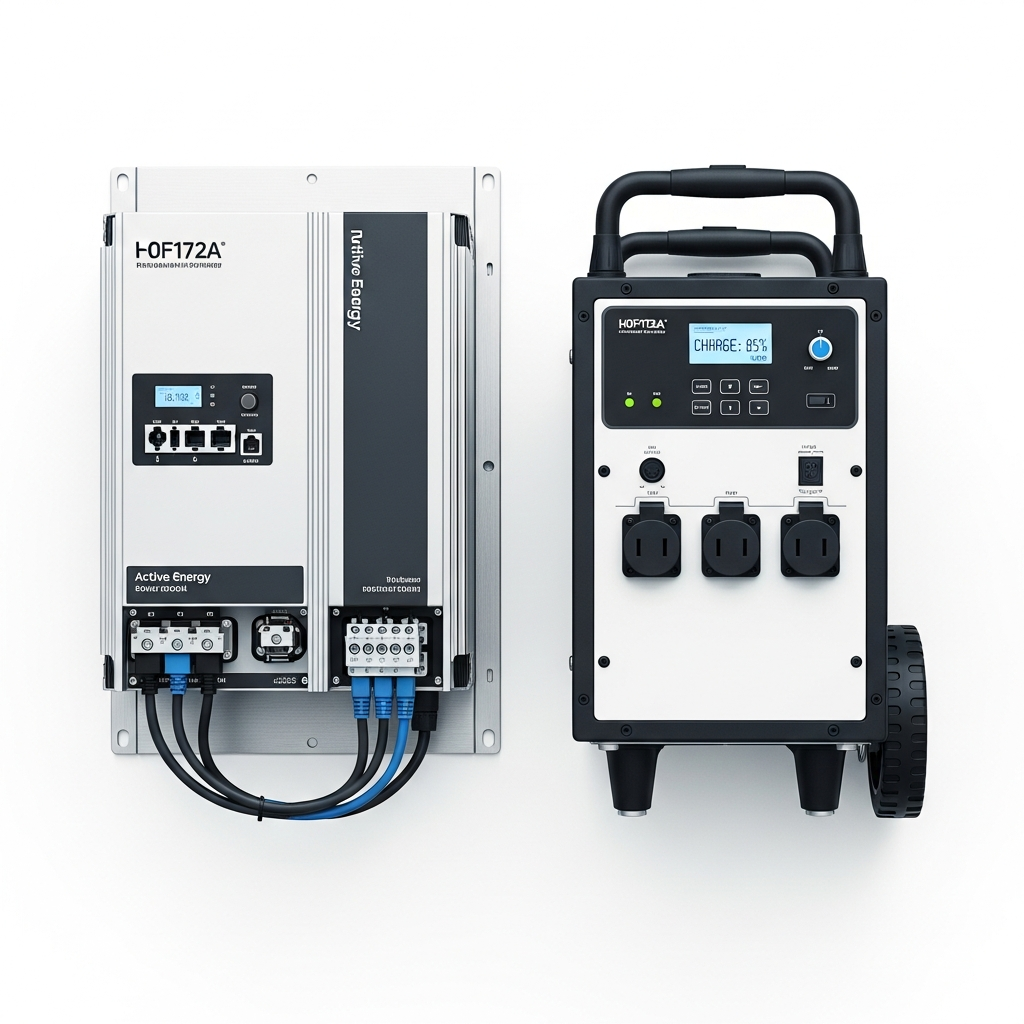
The Bluetti EP900 and EcoFlow Delta Pro Ultra both promise whole-home battery backup with LFP chemistry and 240V split-phase output. They both scale with expansion batteries. They both need a licensed electrician to install. On paper, they look like direct competitors.
They’re not. These are fundamentally different systems built around different installation philosophies. The EP900 is a permanent home appliance that bolts to a wall and hardwires into a subpanel. The Delta Pro Ultra is a modular portable unit that can become permanent if you add the Smart Home Panel 2. That distinction shapes everything — cost, expandability, portability, and how your electrician spends the afternoon.
For how these systems fit into the broader portable-to-permanent category, start with our solar generator for home backup guide. This article goes head-to-head on the two systems specifically.
The spec sheet
| Spec | Bluetti EP900 | EcoFlow Delta Pro Ultra |
|---|---|---|
| Continuous output (single unit) | 9,000W | 7,200W |
| Surge output | 9,000W | 10,800W |
| Base capacity | 9.9kWh (2x B500) | 6.1kWh (1 battery) |
| Max capacity | 39.6kWh (8x B500) | 90kWh (15 batteries, 3 inverters) |
| Battery chemistry | LFP (LiFePO4) | LFP (LiFePO4) |
| Cycle life | 3,500+ to 80% | 3,500+ to 80% |
| Solar input (single unit) | 9,000W | 5,600W |
| Transfer time | <10ms | 20ms (Smart Home Panel 2) |
| Warranty | 10 years | 5 years |
| Inverter weight | 127.8 lbs | 70 lbs |
| Weather rating | IP65 | Indoor recommended |
| Portability | None (hardwired) | Yes (wheeled, has outlets) |
Three numbers jump out immediately.
9,000W continuous from the EP900. That’s 25% more than the Delta Pro Ultra’s 7,200W from a single inverter. A 3-ton central AC compressor that surges to 9,000-12,000 starting watts and settles to 3,500W running is more comfortable on the EP900’s higher continuous output. The Delta Pro Ultra handles it too, but with less headroom for simultaneous loads.
Sub-10ms transfer time on the EP900. The Delta Pro Ultra’s Smart Home Panel 2 switches in 20ms, which is fast enough that clocks don’t reset and refrigerator compressors don’t stutter. The EP900’s sub-10ms is closer to true UPS territory. For medical equipment like CPAP machines or home dialysis systems, that faster switchover matters.
10-year warranty vs 5-year warranty. This is the single biggest differentiator for permanent installation. The EP900 gives you double the warranty coverage. As we noted in our EcoFlow Delta Pro Ultra review, the 5-year warranty is EcoFlow’s weakest point for a system you’re bolting to your home. Both units use identical LFP chemistry rated for 3,500+ cycles, so the batteries should last well beyond either warranty. But if the inverter dies in year 7, EcoFlow makes you pay out of pocket. Bluetti doesn’t.
The installation ecosystem is the real difference
Comparing specs is easy. Comparing how these systems actually get installed and integrated into your home is where the decision gets made.
Bluetti EP900: permanent from day one
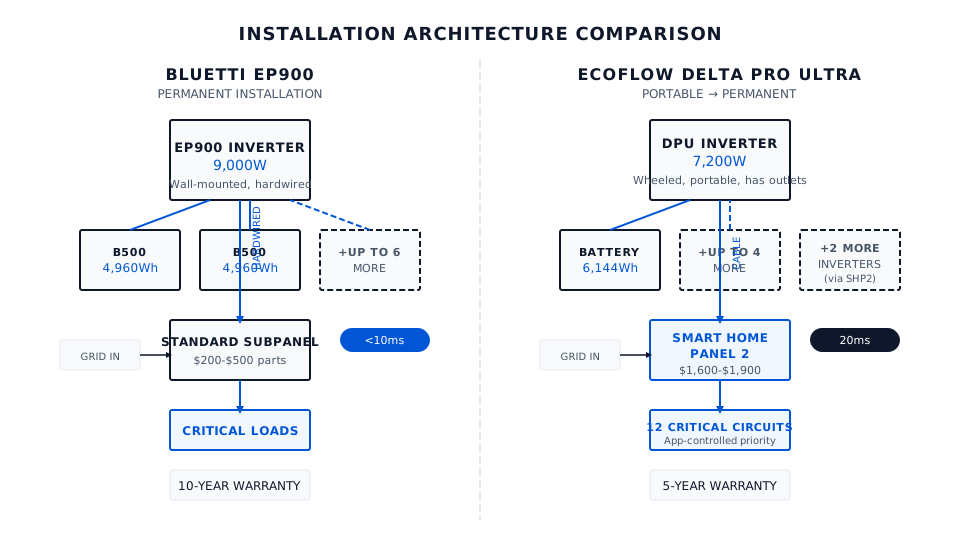
The EP900 is a wall-mounted inverter that hardwires into a subpanel. There are no outlets on the unit. No wheels. No handles. It’s home infrastructure, same category as your water heater or breaker panel.
Your electrician connects the EP900’s backup output to a subpanel that feeds your critical circuits. The utility grid connects to the EP900’s grid input through the same subpanel. When the grid drops, the EP900 takes over your critical loads in under 10 milliseconds. No manual switching, no running outside to plug in a cord.
The B500 expansion batteries stack next to the inverter and connect with proprietary cables. Each B500 adds 4,960Wh. The minimum configuration is two B500s (9.9kWh), and you can stack up to eight per inverter (39.6kWh). Add a second EP900 inverter and you double both the output (18,000W) and the battery ceiling.
The catch: this is a one-way door. Once it’s installed, the EP900 stays put. You can’t wheel it to a job site, take it camping, or use it as a standalone backup before committing to the full installation. You’re paying for the electrician and the subpanel work on day one.
EcoFlow Delta Pro Ultra: portable first, permanent later
The Delta Pro Ultra has wheels, handles, and a full outlet panel including NEMA L14-30 and standard 120V receptacles. Out of the box, it works as a standalone portable power station. Plug extension cords into it, run your fridge off it during a short outage, take it to a tailgate. No electrician required.
When you’re ready to go permanent, add the Smart Home Panel 2. Your electrician installs the SHP2 between your main breaker panel and up to 12 critical circuits. The Delta Pro Ultra connects to the SHP2 via a single high-amperage cable. When the grid drops, the SHP2 transfers those 12 circuits to battery power in 20 milliseconds.
The SHP2 also gives you circuit-level load management through the EcoFlow app. You assign priority levels to each circuit. When battery gets low, the system sheds lower-priority loads automatically. Your pool pump drops off before your refrigerator does.
Each expansion battery adds 6,144Wh and connects to the inverter with a cable. One inverter supports up to five batteries (30.7kWh). Add a second or third inverter through the SHP2 and you reach 90kWh maximum — though at that scale you’re spending more than a Tesla Powerwall setup.
The key advantage: you can buy the Delta Pro Ultra today, use it standalone for six months, and add the SHP2 later when your budget allows. You don’t have to commit $10,000 and an electrician visit on day one.
The cost math
Here’s where the “which one is cheaper” question gets complicated. The answer depends on how much capacity you need.
| Configuration | Bluetti EP900 | EcoFlow Delta Pro Ultra |
|---|---|---|
| ~10kWh system | $9,999 (EP900 + 2x B500) | $7,999 (inverter + 2 batteries) |
| ~15kWh system | ~$13,300 (EP900 + 3x B500) | ~$11,400 (inverter + 3 batteries) |
| ~20kWh system | ~$16,600 (EP900 + 4x B500) | ~$14,800 (inverter + 4 batteries) |
| Smart panel / subpanel | Subpanel (~$200-$500 parts) | Smart Home Panel 2 (~$1,600-$1,900) |
| Installation labor | $1,500-$3,000 | $1,000-$2,500 |
| Total installed (~10kWh) | $11,700-$13,500 | $10,600-$12,400 |
| Total installed (~20kWh) | $18,300-$20,100 | $17,400-$19,200 |
The per-kWh hardware cost favors EcoFlow at smaller configurations. At 10kWh, you’re paying roughly $800/kWh for EcoFlow vs $1,010/kWh for Bluetti. That gap narrows as you add capacity because Bluetti’s B500 batteries add more kWh per dollar at scale.
But the installation cost picture flips. The EP900 uses a standard subpanel — the same kind your electrician installs for generator transfer switches every week. Parts run $200-$500. The SHP2 is a proprietary $1,600-$1,900 smart panel that only EcoFlow makes. That’s $1,100-$1,400 extra just for the panel hardware before your electrician touches it.
At the ~20kWh mark, total installed costs are nearly identical. Below that, EcoFlow is cheaper on hardware but the SHP2 closes the gap. Above that, Bluetti’s lower panel cost and higher per-unit output start to win.
Solar charging and recharge speed
Both systems accept serious solar input, but the EP900 takes substantially more.
The EP900 pulls up to 9,000W of solar through two MPPT channels (3,000W + 6,000W) with a voltage range of 150-500V. That’s enough to fully recharge a 10kWh system from solar in about an hour under ideal conditions. The high voltage input means you can run long string arrays without a separate charge controller.
The Delta Pro Ultra accepts 5,600W per inverter across two PV ports. Still strong — enough to recharge a 6kWh battery in just over an hour with full sun. But if you’re building a larger solar array, the EP900’s 9,000W ceiling gives you more room.
For AC grid charging, the Delta Pro Ultra has the edge. EcoFlow’s X-Stream technology pushes up to 4,400W per battery, recharging a single 6kWh unit from the wall in about 2 hours. The EP900 charges at up to 5,400W from the grid, but across a larger 9.9kWh minimum battery bank, so the time-to-full is comparable.
Where this matters most: extended multi-day outages where you’re supplementing battery with solar. If you have roof space for a large array, the EP900 keeps the batteries fuller throughout the day. If your solar is limited to a few portable panels, both systems perform similarly.
App and software
The EcoFlow app is more mature. Circuit-level load priority through the SHP2, time-of-use rate scheduling, Storm Guard (auto pre-charges before predicted severe weather), and the OASIS energy management system that optimizes around your utility rate schedule. The interface isn’t perfect — connectivity drops over Wi-Fi at distance, and the state-of-charge graph is bizarrely missing from the analytics view — but the feature set is deeper.
The Bluetti app handles the basics: real-time monitoring, working mode configuration, charge scheduling, and peak load shifting. You can share access with up to five family members. It works. But it doesn’t offer circuit-level load management (because the EP900 uses a standard subpanel, not a smart panel), and it lacks weather-triggered automation.
If app-based load shedding matters to you — and for multi-day outages, it should — the EcoFlow ecosystem is ahead. If you just want to set a mode and forget it, Bluetti’s simpler approach is fine.
Durability and environment
The EP900 is IP65 rated. Rain, dust, garage heat, cold snaps — it’s rated for outdoor or semi-outdoor installation. Operating range is -4°F to 122°F. You can mount it in an uninsulated garage or on an exterior wall under an eave without worry.
The Delta Pro Ultra is designed for indoor use. No IP rating. If your garage floods, your installation space is unheated, or you’re considering a shed installation, the EP900 is the safer choice. The DPU’s batteries are fine in moderate temperature ranges, but the inverter doesn’t have the same environmental hardening.
At 127.8 lbs, the EP900 inverter is nearly twice the weight of the DPU’s 70 lb inverter. Both B500 batteries (123 lbs each) and DPU batteries (112 lbs each) are heavy enough that installation is a two-person job regardless.
Who should buy which
Buy the Bluetti EP900 if:
- You’re committed to permanent installation and don’t need portability
- Warranty length is a priority (10 years vs 5)
- You need higher continuous output per unit (9kW vs 7.2kW)
- Your installation space is a garage, shed, or semi-outdoor location
- You have or plan a large solar array (9,000W input ceiling)
Buy the EcoFlow Delta Pro Ultra if:
- You want to start portable and go permanent later
- Circuit-level smart load management matters to you
- You want a lower entry price point (6kWh for ~$5,600 vs 9.9kWh for ~$10,000)
- You might need extreme scalability (90kWh ceiling vs 39.6kWh)
- App features and weather-triggered automation are important
Neither system is the wrong choice. The EP900 is the better permanent home appliance. The Delta Pro Ultra is the better modular platform. Your answer depends on whether you know exactly what you need today or whether you want room to figure it out over time.
Know your actual load before you commit to either system. The capacity you need depends on what appliances you’re backing up and for how long. Run those numbers first: home generator sizing calculator.