Solar generator for a well pump
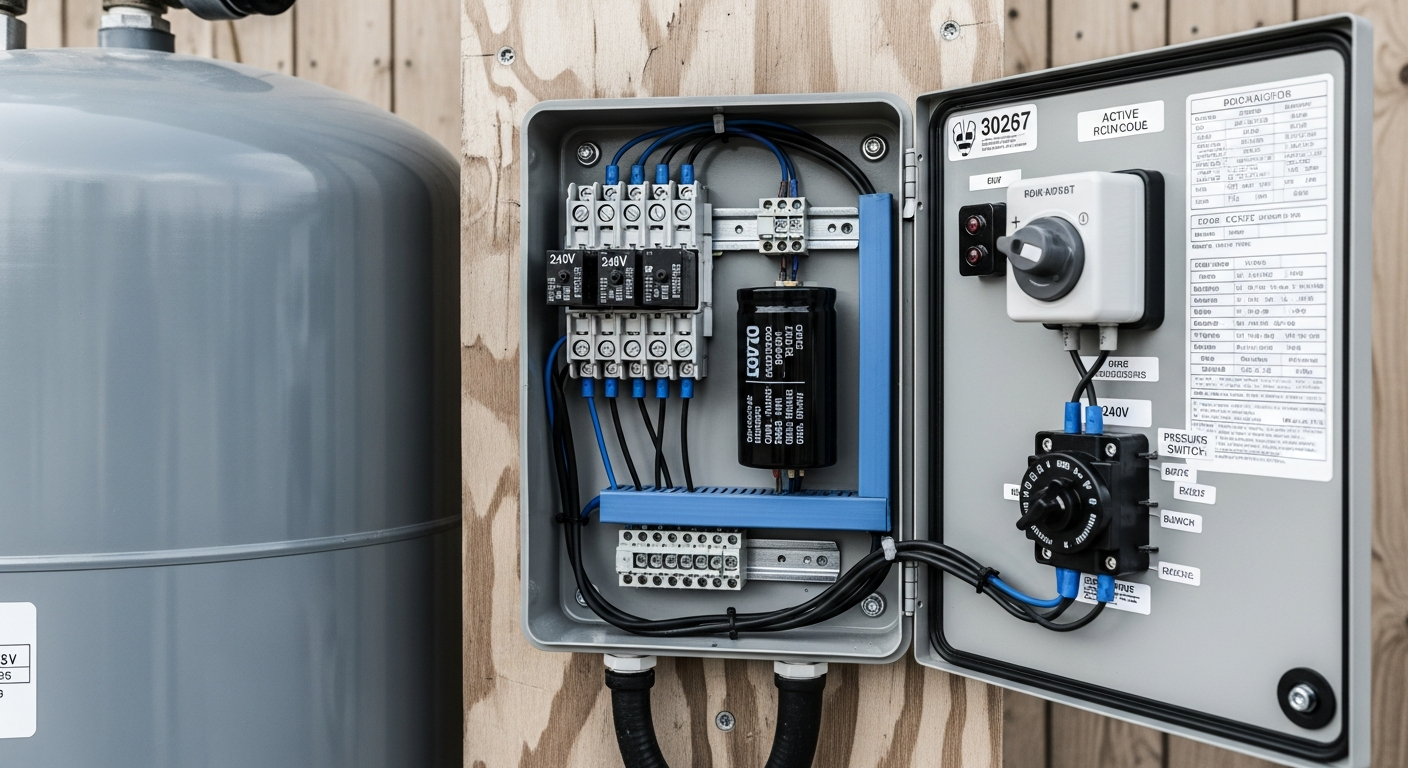
Yes, a solar generator can run a well pump, but only if the unit outputs true 120/240V split-phase power and can survive the startup surge. Franklin Electric’s sizing table puts a 1 HP pump at a 4 kW minimum generator, and Franklin says 2-wire motors want 50% more than that for best starting. That is why so many 120V-only battery boxes fail even when the battery itself is huge.
If you are still figuring out how portable battery systems connect to a house, start with our solar generator for home backup guide first. This article is the narrower question: can your specific pump start, keep running, and connect safely to your panel during an outage?
First check the breaker and control box
Most deep-well submersible pumps in houses are 240V loads on a double-pole breaker. If that is what you have, a 120V-only solar generator is out before you even get to wattage.
This is the part homeowners miss. They shop by battery capacity — 2 kWh, 3.6 kWh, 5 kWh — when the real gate is inverter output. A 5 kWh battery with a 2,000W 120V inverter will not run a 240V well pump. A smaller battery with a true split-phase 120/240V inverter often has a much better shot.
Open the pump control box if you have one. A 3-wire pump uses a control box mounted above ground. A 2-wire pump usually does not. That matters because Franklin’s manual says the minimum generator table applies to both, but “for best starting of 2-wire motors, the minimum generator rating is 50% higher than shown.” In plain English: the 2-wire pump is usually the harder case.
There are exceptions. Some shallow-well jet pumps and booster pumps are 120V. Some variable-speed well pumps are designed around soft start from the factory. But if your well pump lives on a 240V double-pole breaker, assume you need 120/240V split-phase output until the nameplate proves otherwise.
The pump’s startup surge is the whole game
Well pumps do not use much energy across a full day. They use a lot of power for a very short moment when the motor starts. That is why people get fooled.
Franklin Electric says engine-driven generators need to deliver at least 65% of the motor’s rated nameplate voltage during starting. That is a polite way of saying voltage sag kills starts. A battery inverter that looks adequate on paper can still fall on its face if the pump hits it hard enough at startup.
Here is the Franklin minimum generator table that matters most for typical residential pumps:
| Pump motor | Franklin minimum generator | Safer target for 2-wire pumps | What this means in practice |
|---|---|---|---|
| 1/2 HP | 2.0 kW | 3.0 kW | Split-phase inverter required if pump is 240V |
| 3/4 HP | 3.0 kW | 4.5 kW | Many 120/240V battery units are still too small |
| 1 HP | 4.0 kW | 6.0 kW | 6 kW class is the practical floor for many homes |
| 1.5 HP | 5.0 kW | 7.5 kW | Now you are in serious inverter territory |
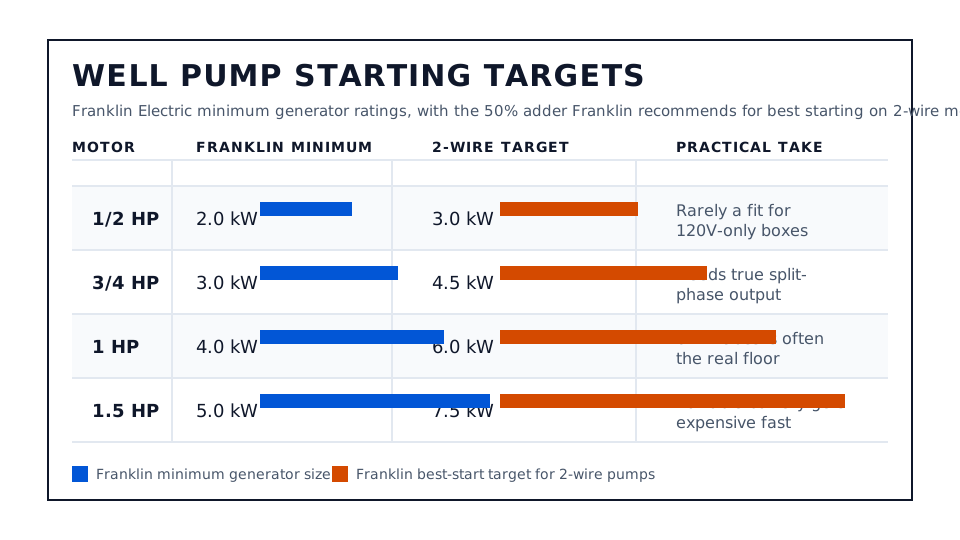
That table is about starting, not runtime. A 1 HP pump might only run for a few minutes at a time and use less than 1 kWh across a day of normal household water use. But if it needs 4 to 6 kW to get moving, your inverter has to clear that bar every single time the pressure switch calls for water.
This is why “big battery, small inverter” is the wrong way to shop for a well pump. You are buying startup capability first and battery runtime second.
Why 120V-only solar generators disappoint
The failure pattern is the same over and over. A homeowner sees a power station rated at 3,600W and assumes that is enough because the pump only draws 800 to 1,500 watts once it is running. Then the outage hits, the pressure tank empties, the pump tries to start, and the inverter trips.
On forums and Q&A sites, the story usually ends with the same realization: the pump breaker is 240V, the inverter was 120V only, and the battery never had a chance.
There are two separate problems:
- Voltage mismatch. A standard 240V well pump needs true 120/240V split-phase output. Two ordinary 120V outlets on the front of a battery box do not create that.
- Startup headroom. Even if the inverter makes 240V, it still needs enough surge or short-term overload capability to start the motor without collapsing.
That is why a rare 120V shallow-well pump can sometimes run from a mid-sized power station while a deeper 240V submersible pump refuses to budge on a battery system that cost twice as much.
Soft-start and VFD pumps change the math
This is where people hear a half-true story and get in trouble.
Yes, soft-start technology can dramatically cut startup demand. Micro-Air says its EasyStart soft starter can reduce air-conditioner startup surge by up to 75%. But that is an HVAC product. Do not assume an AC soft starter is a drop-in answer for a well pump.
For wells, the better examples are pump-specific soft-start and variable-speed systems. Grundfos markets the SQ and SQE lines around soft start and low starting current. Franklin also publishes generator sizing for its own pump-control products: a 1 HP MonoDrive system is listed at 3,500 watts minimum, while Franklin’s SubDrive Utility UT2W is listed at 6,000 watts minimum.
That is the right takeaway: soft start can absolutely help, but it does not mean “any battery will do.” Sometimes it cuts a 1 HP problem from “needs a 6 kW split-phase inverter” to “works on a 3.5 to 4 kW system.” Sometimes it just makes a marginal setup less miserable. You still need to know what controller is actually on your pump.
If you are planning a battery-first backup system for a well house, there are three cheap upgrades that matter:
- Increase pressure tank size so the pump cycles less often.
- Store emergency water so you are not starting the pump constantly during the outage.
- Ask whether a pump-specific VFD or soft-start retrofit is approved for your motor.
Those three moves are often worth more than chasing another 1 kWh of battery.
The wiring still has to be legal
Even if the inverter can start the pump, you still need a legal connection path into the house. That means a generator inlet box and either a transfer switch or an interlock kit installed by a licensed electrician.
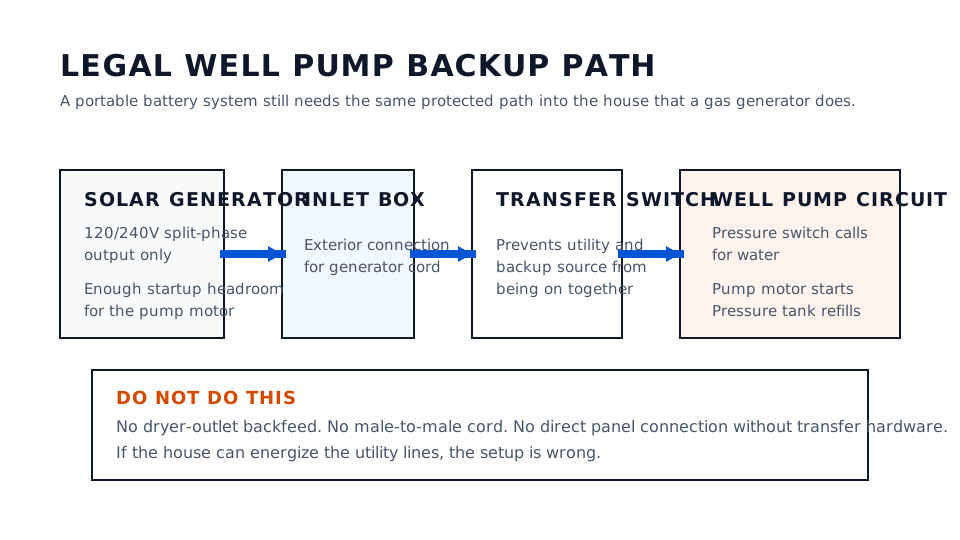
Do not backfeed the house through a dryer outlet. Do not use a male-to-male cord. If you need the full explanation, read running a house on a portable generator safely. The same rule applies whether the power source burns gasoline or sits on lithium cells: the house and the utility cannot be connected to each other at the same time.
What size solar generator actually makes sense
Here is the practical buying guide.
If you have a 120V shallow-well pump: verify the nameplate, then a 2 to 3 kW power station may work if startup surge is modest. This is the minority case.
If you have a 240V 1/2 HP or 3/4 HP conventional submersible pump: start looking at true 120/240V split-phase systems, not ordinary 120V boxes. A 3 to 4.5 kW target is the real number depending on whether the motor is 3-wire or 2-wire.
If you have a 240V 1 HP pump: treat 6 kW split-phase output as the practical floor unless the pump has documented soft start. That is why systems like the Anker Solix F3800 home integration setup are in the conversation while smaller 120V units are not. If you want more margin, the Jackery Explorer 5000 Plus is rated for 120/240V output at up to 7,200W continuous and 14,400W surge.
If the pump is 1.5 HP or larger, or the house has frequent pump starts: be careful. A portable battery system may still work, but the economics get ugly fast. At that point a standby generator, a permanently installed battery system, or plain old water storage may be the smarter answer.
The other question is runtime. A well pump does not run continuously, so runtime usually is not the first problem. If your battery system can start the pump and you manage the rest of the house intelligently, daily water use often consumes less battery than people expect. Use our home generator sizing calculator to total the rest of your outage loads so the pump is not competing with a refrigerator, microwave, and space heater all at once.
Open the breaker panel or well control box before you buy anything. If the pump is 240V and 2-wire, stop shopping 2,000W battery boxes. Match the inverter to the pump first, then worry about battery size. Once you have those numbers, go back to our solar generator for home backup guide and decide whether a portable battery system still makes sense for your house.