Running a house on a portable generator safely
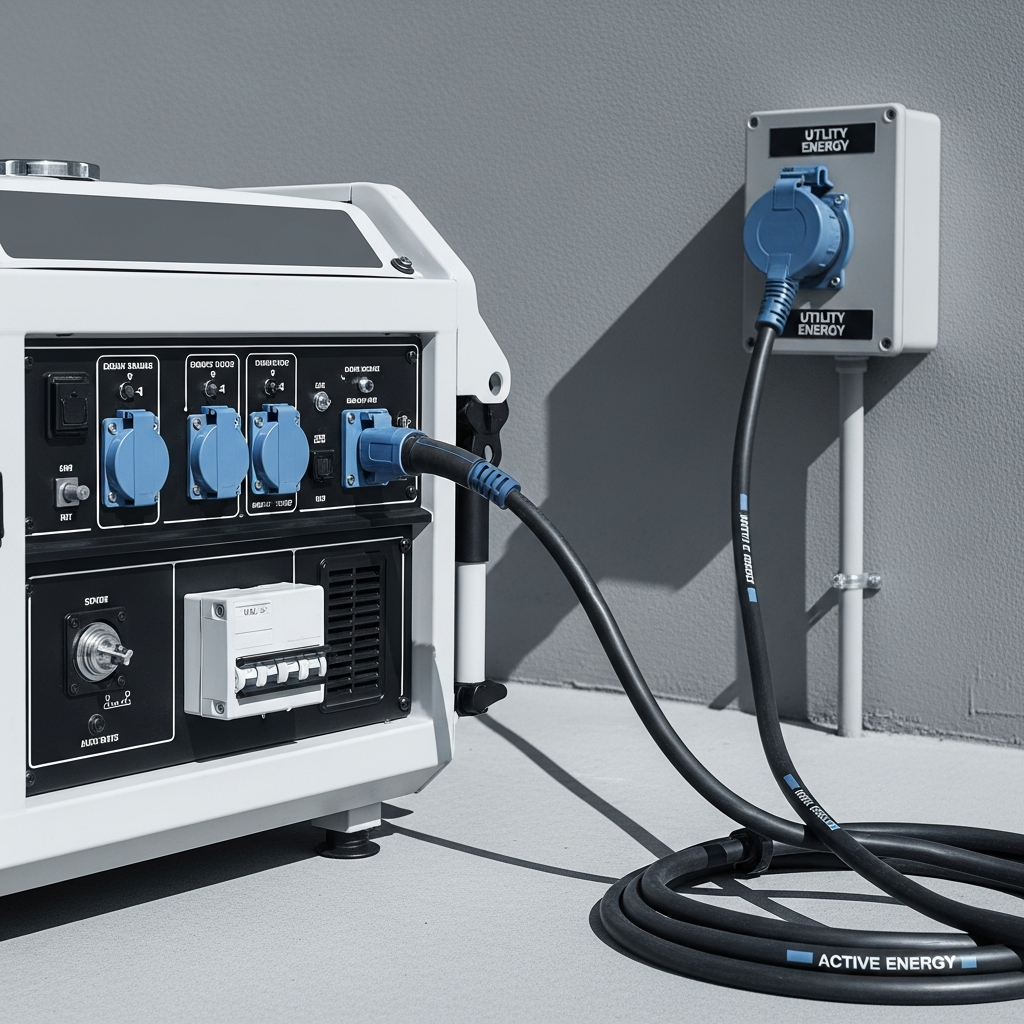
The safe way to run a house on a portable generator requires two things: proper connection through a transfer switch or interlock kit installed by a licensed electrician, and the generator running outdoors at least 20 feet from any opening. Everything else in this article explains why those two rules exist and what happens when people skip them.
Get those two things right and you’ll power your home safely. Get them wrong and you will kill yourself, your family, or a utility worker.
Carbon monoxide: the #1 generator killer
Portable generators produce carbon monoxide. CO is odorless, colorless, and kills quickly. At high concentrations — the kind a generator produces in an enclosed space — you can lose consciousness before you realize anything is wrong. You do not smell it. You do not see it. You just stop.
OSHA data shows CO poisoning from portable generators kills approximately 70 people per year in the United States. That number spikes after major storms when people run generators to power their homes.
The rule: generators run outdoors. Not in a garage. Not in a breezeway. Not under a covered porch. Outdoors, in the open air, at least 20 feet from any door, window, or vent. The exhaust from a generator in an attached garage will enter the house even if the garage door is open.
CO does not dilute fast enough in partially enclosed spaces. 20 feet is the minimum clearance. Point the exhaust away from the house. If you can smell exhaust from inside, the generator is too close.
CO detectors save lives. If you don’t have working CO detectors on every level of your home, fix that today — not on the next outage. They are $20 at any hardware store.
The suicide cord: what it is and why it kills
A suicide cord is a dual-male-plug extension cord. Both ends are male plugs. Some people use them during outages by plugging one end into the generator and the other end into a household outlet, usually a dryer or refrigerator outlet. The theory is that power flows from the generator back into the house wiring through that outlet.
It works, in the sense that it puts electricity in the wires. It also kills people.
Here is what actually happens. Your home’s wiring connects to the utility transformer at the street. When you backfeed your panel through a wall outlet, power flows through your house wiring, through your meter, and out onto the street-level utility lines. Those lines look de-energized to a utility crew working to restore power after a storm. They are not. The generator is energizing them. Linemen grabbing those wires get electrocuted. This happens. People die from it every storm season.
Inside your house, the suicide cord also bypasses all circuit breaker protection. The wiring in the wall and the outlet itself are not rated to carry generator-level loads. You get fires.
The suicide cord is a federal NEC violation. It is illegal. It kills utility workers. It burns houses down. There is no scenario where it is acceptable. If someone tells you it works fine, they have been lucky, not safe.
The proper connection method
The right way to connect a generator to your house uses a generator inlet box mounted on your exterior wall, wired through a proper generator cord to a transfer switch inside your panel. The inlet box looks like a large outdoor outlet. The transfer switch — whether an interlock kit or a manual subpanel — prevents the generator and the utility from ever being connected at the same time.
For a full comparison of your options, see interlock kit vs transfer switch.
Here is the correct sequence for each outage:
- Shut off the main breaker first. This disconnects your home from the utility grid before anything else happens.
- Connect the generator to the inlet box using a properly rated generator cord. Not a household extension cord.
- Start the generator outdoors and let it run for 30–60 seconds to stabilize voltage and frequency.
- Activate the transfer switch or flip the interlock — whichever hardware your electrician installed.
- Turn on your critical circuits one at a time. Stagger the loads. Do not flip everything on simultaneously.
When utility power returns, reverse the sequence. Turn off circuits one at a time, deactivate the transfer switch, shut off the generator, disconnect the cord, then flip the main breaker back on.
That sequence exists for a reason at every step. The main breaker goes off first so you never have generator and grid active simultaneously. Circuits come on one at a time to avoid slamming the generator with a massive startup surge all at once.
Grounding
Most modern portable generators use a floating neutral — the neutral and ground are not bonded inside the generator. When you connect this type of generator to your house through an inlet box wired by an electrician, the house panel’s existing neutral-ground bond handles grounding. You don’t need a separate ground rod in this configuration.
If your generator bonds neutral and ground internally (called a separately derived system), additional grounding requirements under NEC 250.30 may apply. Ask the electrician who installs your inlet box which configuration your generator uses and whether a ground rod is required. This is not something to guess at.
Extension cords: when you’re not using the panel
If you’re running appliances directly off the generator’s outlets rather than through the house wiring, extension cord quality matters.
Use 12 AWG cords or heavier. A standard household extension cord is typically 16 AWG, which is undersized for anything that draws significant current. Undersized cords overheat. Overheated cords in wet conditions — which is exactly when you’re using a generator — are a fire and shock hazard.
Use cords rated for outdoor use. They’re marked “W” or “outdoor use” on the jacket. Never use indoor extension cords in rain, on wet pavement, or anywhere moisture can reach the connections.
Keep connections off the ground. Protect plugs from puddles. A ground fault on a generator that lacks GFCI protection on all outlets can energize anything connected to it.
Check the math on starting watts vs running watts before you decide what to plug in directly vs what to power through the panel.
Fuel handling
Refueling a hot generator causes fires. Turn the generator off. Let it sit for at least two minutes before opening the fuel cap. The engine and exhaust components stay dangerously hot after shutdown.
Never store gasoline inside the house, an attached garage, or any enclosed space connected to living areas. Store it in approved containers, away from the house. Gasoline vapors are heavier than air and pool at floor level where any ignition source — water heater pilot, furnace igniter, refrigerator compressor — can set them off.
Use fresh fuel or fuel treated with a stabilizer. Stale gasoline from last year’s can degrades carburetor components and leads to hard starts and poor performance when you need the generator most.
Overloading the generator
Every generator has a rated continuous output in watts. That number is the ceiling. Going over it triggers the overload protection — the generator shuts down or the circuit breaker trips.
Starting too many large loads simultaneously is the common mistake. Motors — refrigerators, well pumps, air conditioners — draw significantly more power at startup than they do running. This is the starting watts vs running watts problem. A well pump with a 1,000-watt running load may pull 2,500 watts for the first two seconds of startup. If you start five appliances at once, those startup surges overlap and exceed the generator’s output.
The staggered startup sequence (step 5 above) prevents this. Turn on one large appliance. Wait for it to stabilize. Then turn on the next.
Sustained overloading above rated output damages the generator’s Automatic Voltage Regulator and can damage connected electronics through unstable voltage. Run within the rated continuous output, not the surge or peak rating listed on the label.
If you’re not sure whether your generator is sized correctly for the loads you want to run, work through a solar generator for home backup comparison to understand your actual wattage requirements — the sizing math applies regardless of fuel type.
Wet conditions
Most portable generators do not have GFCI protection on all outlets. Rain, wet hands, and pooling water around the generator create shock hazards.
Run the generator under a canopy or open-sided tent specifically designed for generator use. The canopy must be open on the sides — enclosed is not acceptable for exhaust ventilation. Position it so rain cannot blow directly onto the outlets.
Never run the generator without weather protection in rain. Never touch the generator or its outlets with wet hands.
Keep the generator on a level, hard surface. Grass or soft ground can shift, and a tipped generator spills fuel onto a hot engine.
The inlet box and transfer switch installation is a one-time cost that protects your family every time the grid goes down. Get the full breakdown on your options: interlock kit vs transfer switch.